This story was produced and originally published by Wisconsin Watch, a nonprofit, nonpartisan newsroom. It was made possible by donors like you.
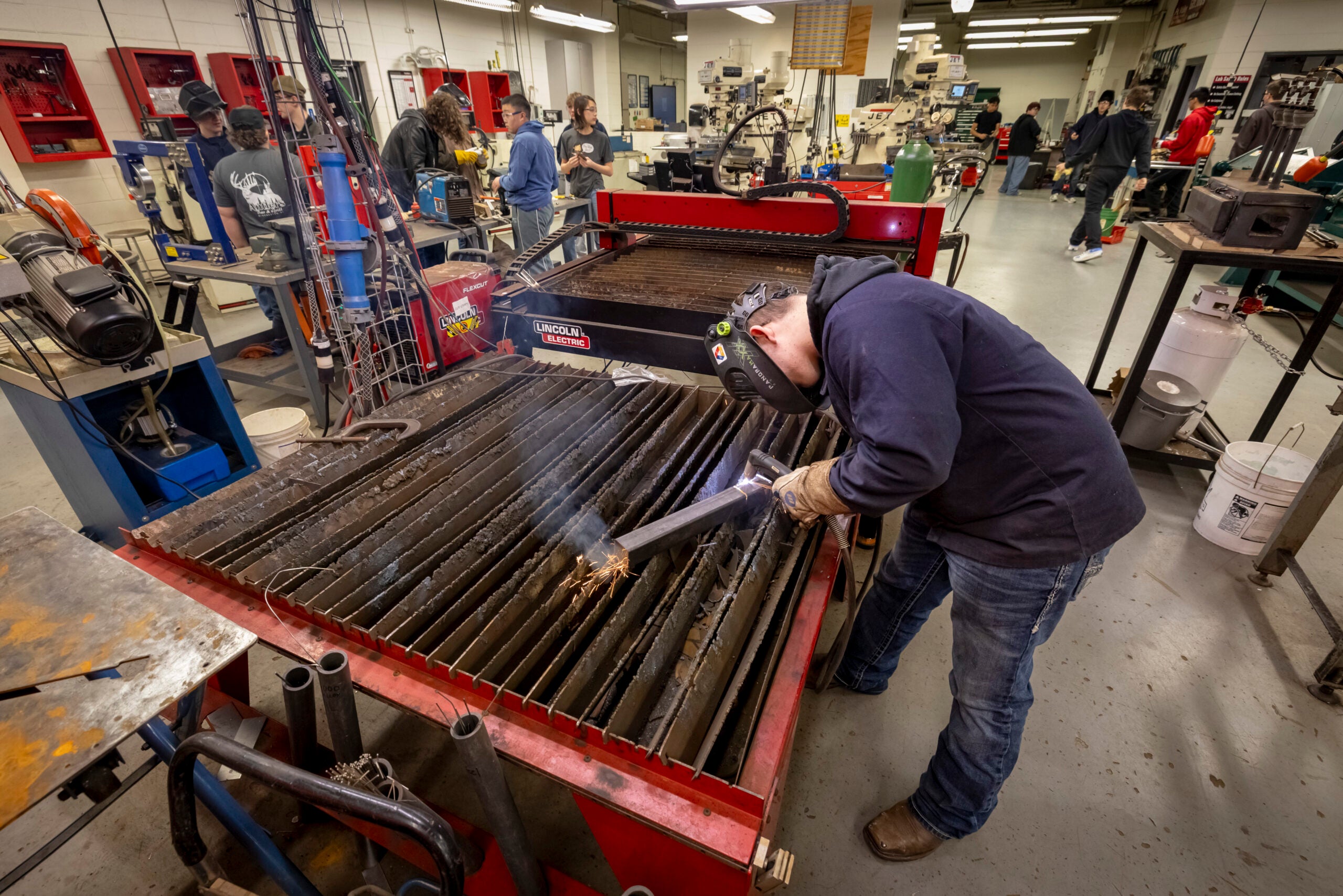
A cacophony of humming, drilling, banging and buzzing fills Appleton Technical Academy’s cavernous lab.
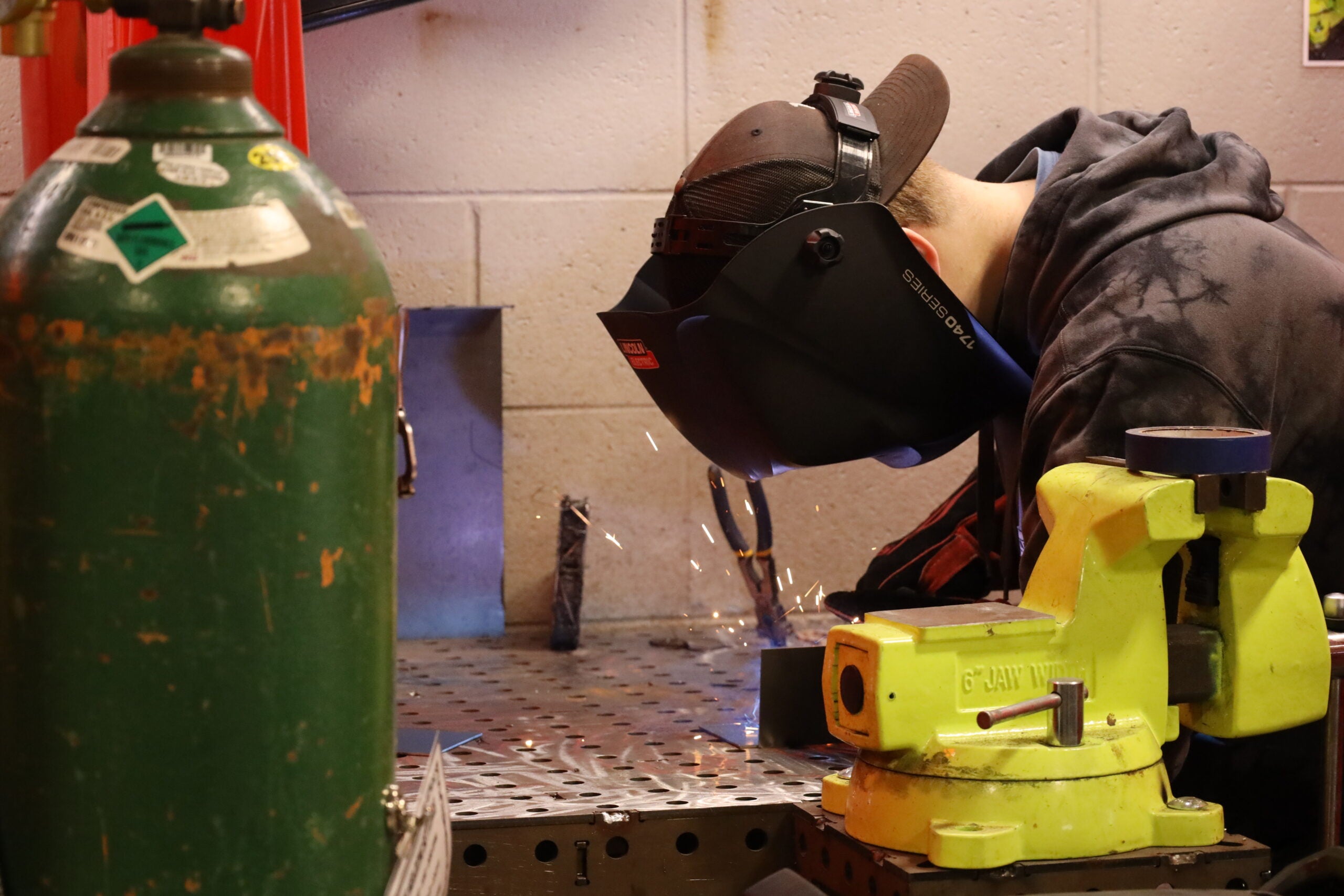
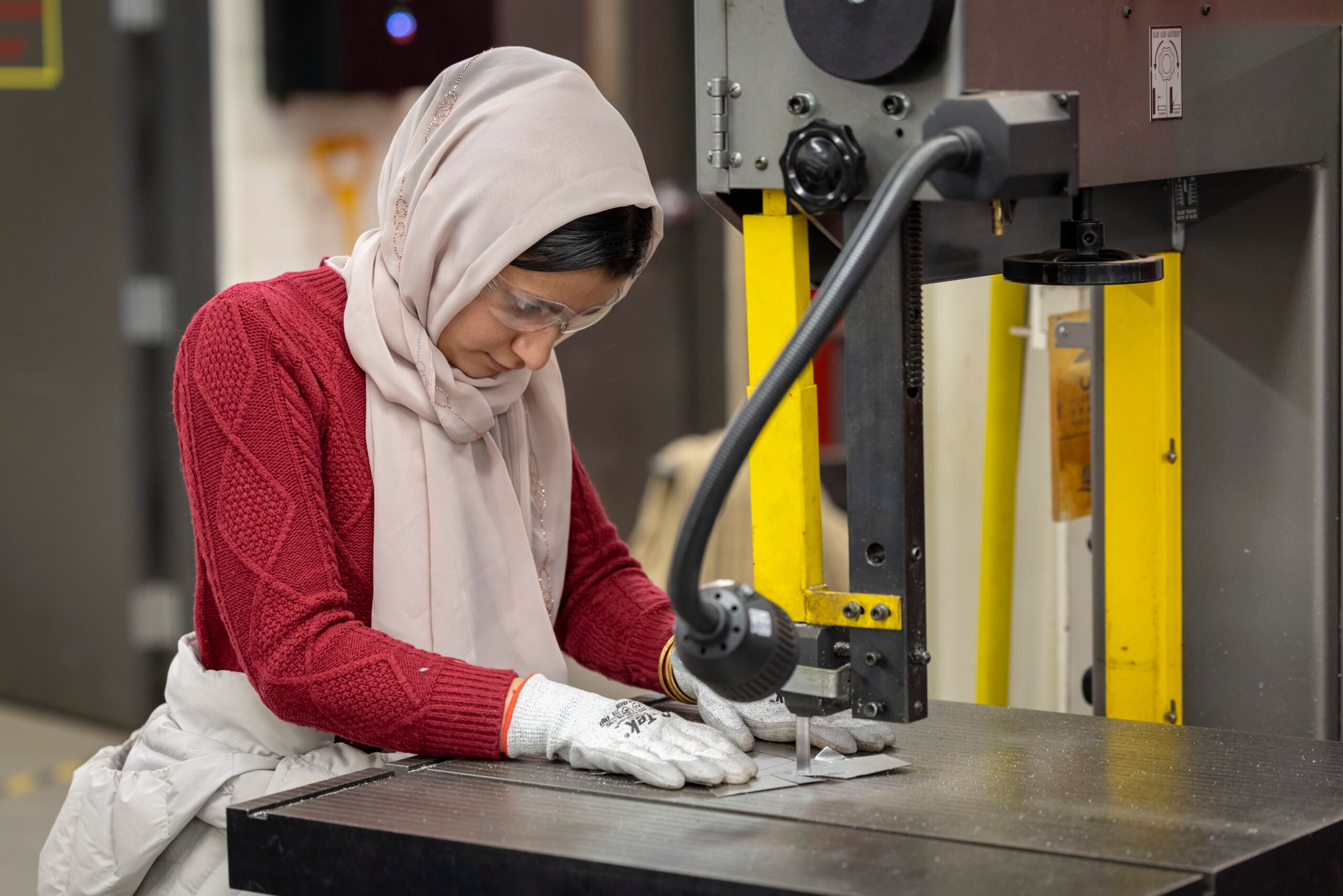
In one corner, a student drills ventilation holes in a piece of metal that will eventually be a firepit ring. Another cuts through a thin piece of metal with clippers. Shrouded by red vinyl curtains, several students weld metal, sending blue sparks flying through the air.
News with a little more humanity
WPR’s “Wisconsin Today” newsletter keeps you connected to the state you love without feeling overwhelmed. No paywall. No agenda. No corporate filter.
As more schools embrace career and technical education, scenes like these are increasingly common in high schools nationwide: fewer students gripping pencils at desks; more wielding expensive tools and receiving hands-on training for their future career.
Part of that trend, Appleton Technical Academy (ATECH) opened a decade ago to ease the region’s shortage of advanced manufacturing workers. Today, many of the students love their hands-on classes, enroll in paid apprenticeships and collect free college credit before continuing on to trade school.
But it hasn’t been without difficulties. The school has struggled to attract students, combat a persistent stigma around technical education and afford the pricey equipment and tools it requires. Plus, it’s hard to determine if the school has met the original goal of producing local manufacturing employees.
What’s happening at ATECH shows how preparing Wisconsin teenagers to eventually fill workforce holes, especially amid the state’s dearth of skilled trade workers, can be a tall task.
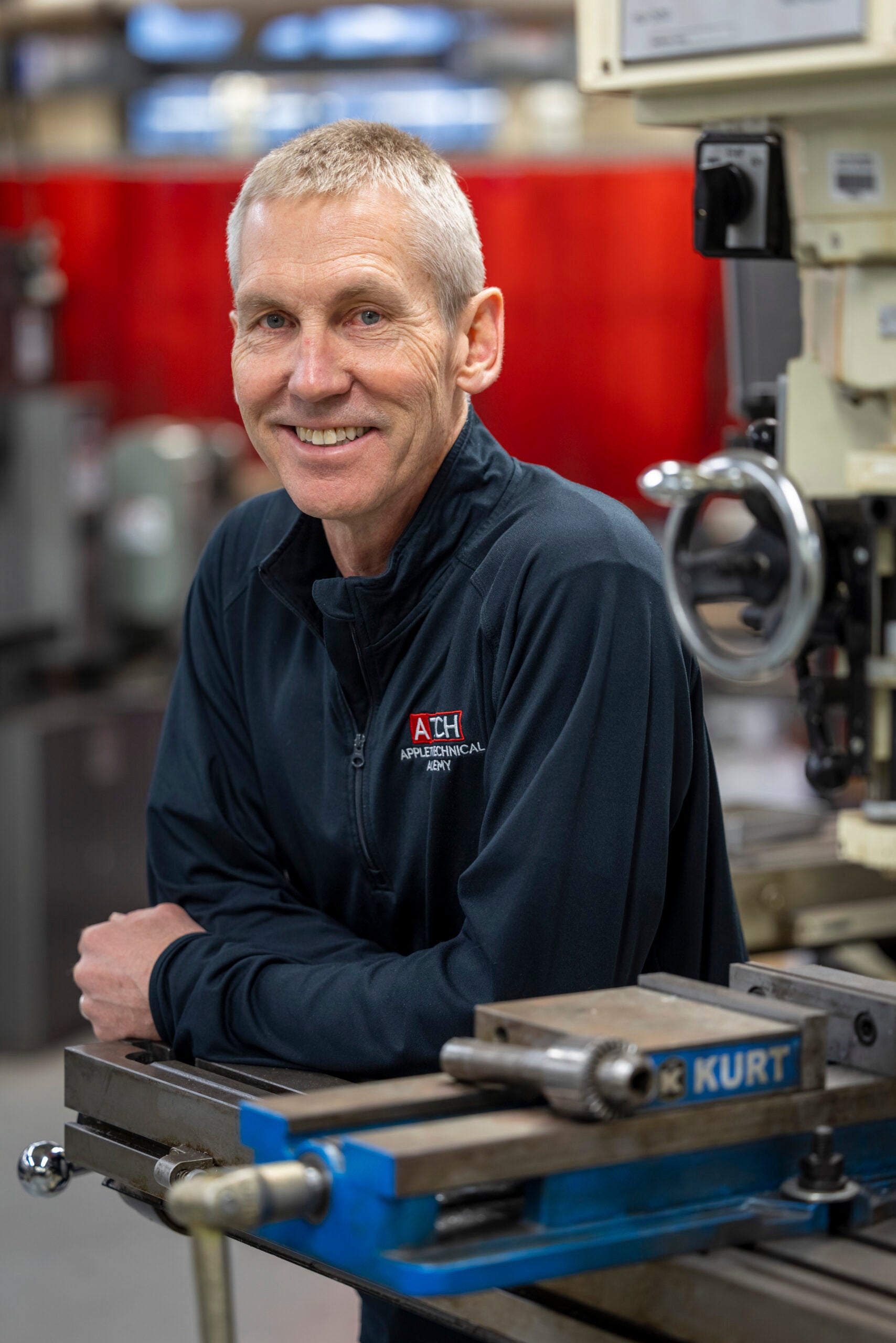
ATECH lead teacher Paul Endter spends his lunch breaks and free time trying to grow local support for the school and get more students interested.
“I continue to tell people we’re the best-kept secret in the Fox Valley, and that’s not by design,” Endter said. “I wish I had more people who wanted to get involved.”
Born from industry needs
In the early 2010s, Jared Bailin, CEO of Appleton-based Eagle Performance Plastics, was struggling to find enough advanced manufacturing workers. The plastic manufacturing leader thought introducing high schoolers to the jobs would help.
He took the idea to Greg Hartjes, who was principal of Appleton West High School at the time. Hartjes is now the school district’s superintendent and has always worried about students who don’t mesh with traditional high school education structure — students who, he says, “perhaps didn’t want to sit in English class and read Shakespeare,” but rather wanted “their hands in the work that they were doing.”
Together, they built ATECH, a tuition-free charter school inside Appleton West that aims to prepare students for manufacturing jobs. They secured state grants to fund the launch, and Appleton voters approved a district referendum that put $2.4 million toward renovating labs and classroom spaces.
The school opened in the 2014-15 school year. Here’s how it works: Students can apply to the school at any point, but most enroll their freshman year. They choose to specialize in one of four growing industries: electronics and automated manufacturing, machining, mechanical design or welding.
At first, students take a small number of classes that introduce them to the basics of manufacturing alongside the traditional courses required of all high schoolers, such as language arts and math. Students gradually take on more courses aligned to their specialization, such as programming for electronics students or blueprint reading for machining students.
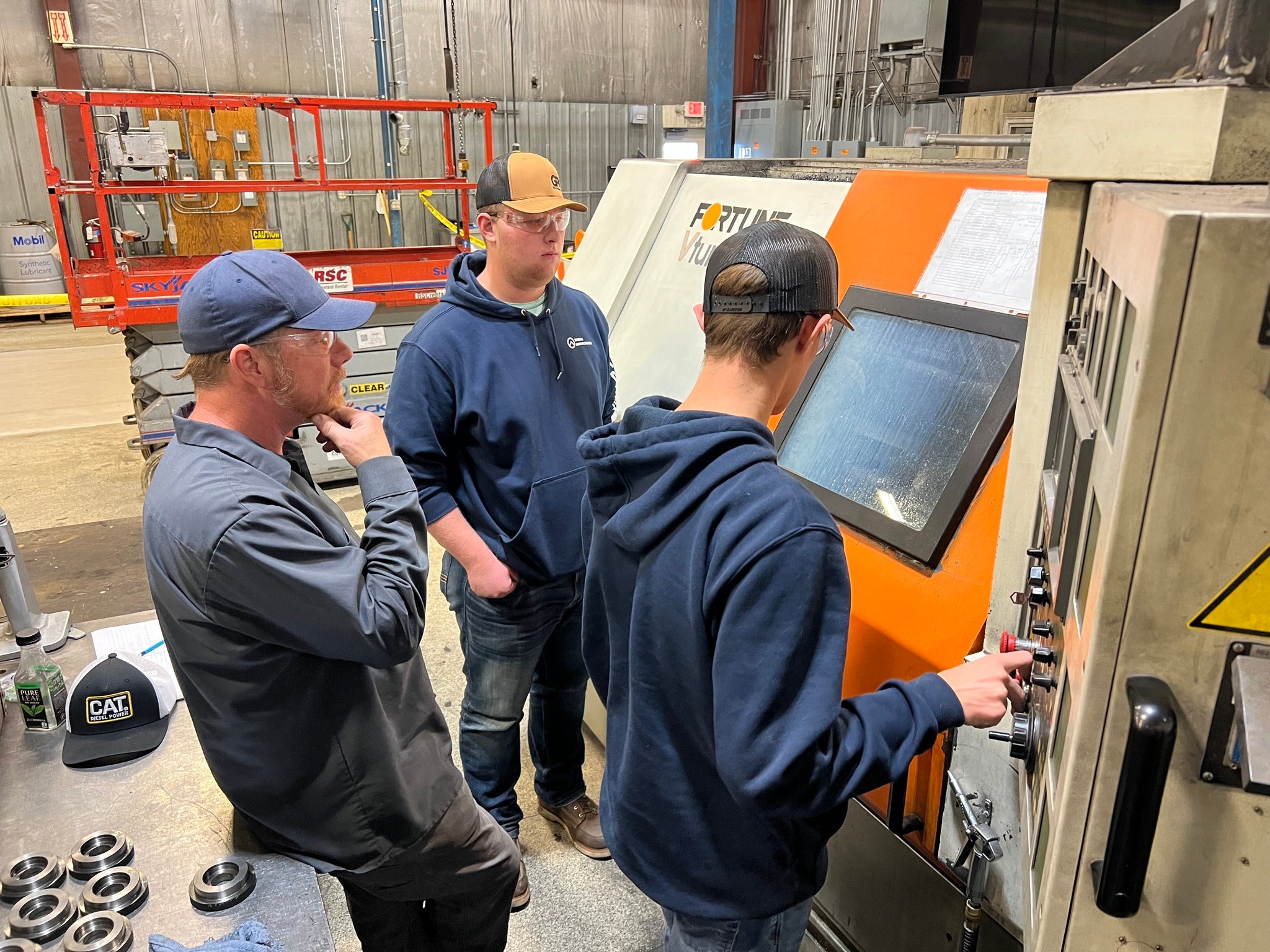
Beginning their junior year, students take free college classes that earn both high school and Fox Valley Technical College credit. The classes chip away at a certificate in their focus area, which can shave thousands off tuition for students who enroll in technical college after graduation. Some juniors and seniors can work for local employers as paid youth apprentices during part of the school day, earning money and gaining work experience.
“ATECH kids are kids that wanted to use their hands along with their brain in learning,” Hartjes said.
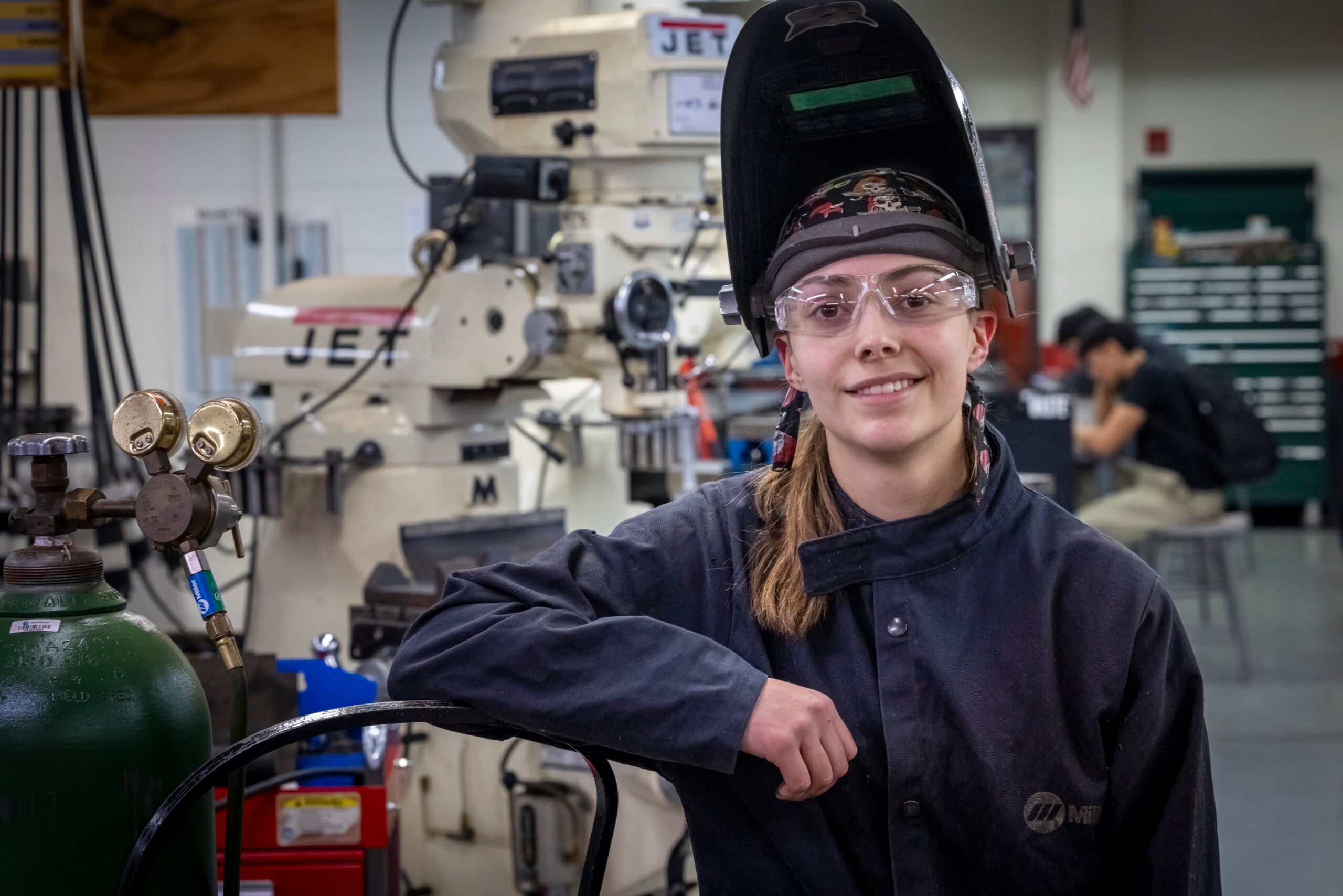
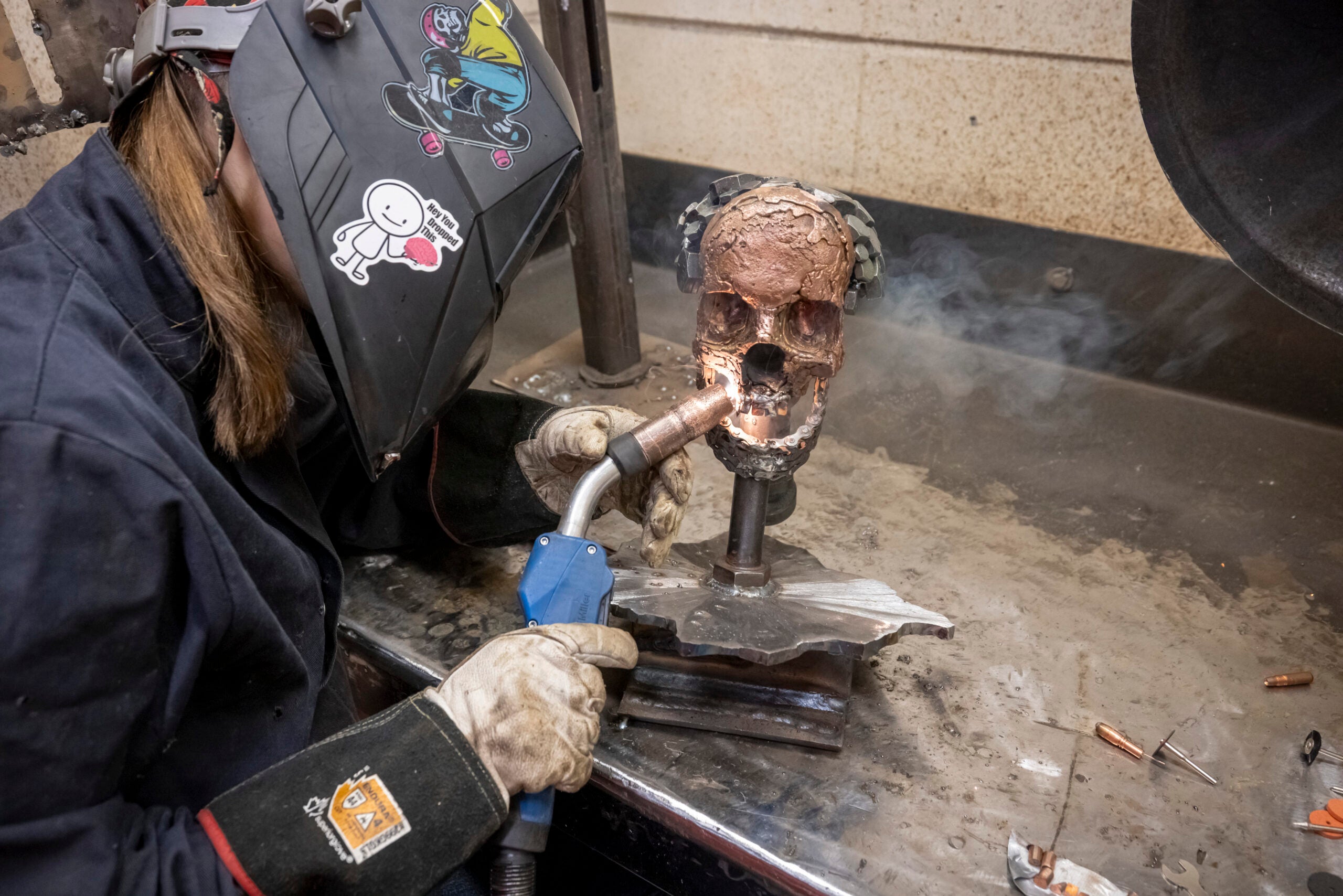
That’s the reason senior Izzy Chappell enrolled. On an early December morning, she dipped into one of the lab’s eight welding booths wearing a helmet to protect from the harsh UV rays and flying sparks. She put the finishing touches on a welded metal skull sculpture she entered in a regional SkillsUSA competition that night.
“Other classes are hard,” Chappell said. “This comes easy to me.”
Getting students excited a struggle
ATECH leaders hoped the school would be a magnet for students, but getting them interested has been a challenge.
The school debuted with 56 students. Enrollment has fluctuated a bit over the decade, never reaching the district’s goal of 120. In the 2024-25 school year — the most recent year with available state data — 68 students enrolled.
Leaders chalk the lower-than-desired enrollment up to several difficulties: The district doesn’t provide transportation to charter schools, meaning these students typically have to find their own way to school. A jump start toward a career simply doesn’t resonate with many teenagers as young as 14, who Endter said are more motivated by sports or where their friends go to school.
And most of all, ATECH leaders find many families still see college degrees as the gold standard. Despite growing investment in career and technical education programs nationwide and the critical need for skilled workers in Wisconsin, they say a stigma still plagues technical education, leading many to believe it’s for students who don’t perform well in school.
“I think a misconception often is that it’s not rigorous, and it’s not for students that have an aptitude or are intelligent,” Hartjes said. “That’s not the case. We’ve given kids an opportunity to really learn using both their hands and their head.”
When ATECH was brand new, a state grant helped the school afford TV commercials and mailers. That money is long gone. Nowadays, Endter visits nearby middle schools to talk to students about career education. They organize tours and career fairs, where ATECH leaders try to entice students with the spacious labs and high-tech equipment.
“It’s not for lack of trying, you know?” Endter said. “But again, as an incoming eighth grader, charter schools represent something different. For some kids, different is good. And for some kids, different is not. So many kids don’t know what could or should be the best pathway for them.”
Meeting workforce needs?
Sophomore Noah Siong enrolled in ATECH because his brother graduated from the school and went on to open his own car repair shop.
“That kind of opened the gateway to me,” Siong said. “It was like, ‘Oh, this stuff is pretty cool.’”
Siong wants to pursue a career in metal fabrication after graduation. Hartjes estimates hundreds of students like Siong have learned “skills that have prepared them for careers” over the last decade. But it’s difficult to know exactly how many students have gotten jobs that use the skills they learned at ATECH.
Wisconsin, like many states, doesn’t have a system connecting education and employment data, according to a 2024 Education Commission of the States analysis. The evidence ATECH leaders collect is largely anecdotal, but Endter said it indicates the vast majority either continue to technical college to finish their programs or turn their youth apprenticeships into full-time jobs after graduation. Endter estimates about 10 percent pursue a four-year degree.
Bailin, the Eagle Performance Plastics CEO, said ATECH hasn’t produced as many local manufacturing employees as he hoped when he helped create the school.
“It didn’t really come out the way I would have hoped,” Bailin said. Eagle has hired between one and three apprentices from ATECH each year. He estimates roughly half have moved into full-time jobs, but it hasn’t been enough to produce the pipeline of machining employees he wanted. The company is no longer closely tied to the school, Bailin said.
In a measure of its academic performance, ATECH’s state rating has averaged a score of 58, which the Department of Public Instruction, or DPI, defines as “meets few expectations.” Hartjes said the hands-on skills students learn are not reflected in the state’s rating system. For example, the college classes students take, however advanced, don’t factor into the school’s rating.
“If they were … tested on their aptitude for mechanics, I guarantee you that they would outscore many other students across our state,” Hartjes said. “If they were being tested on those different things that we focused on, I guarantee you that their knowledge, their experience and their aptitude is going to shine through. But, you know, they don’t.”
‘Just can’t fund all of this’
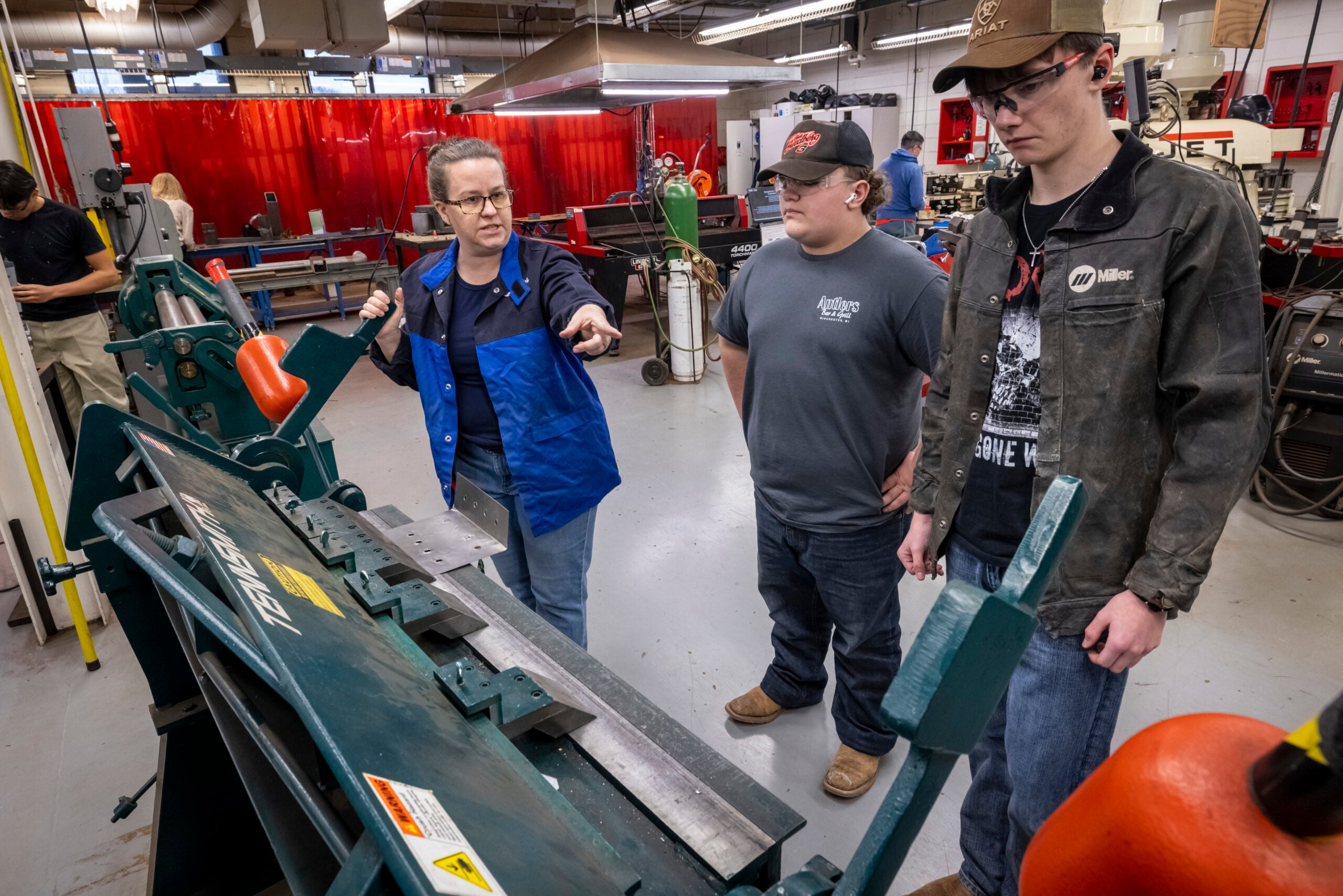
“I’m going to teach you about different kinds of metal!” technology education teacher Carrie Giauque shouts so students hear her in the noisy lab. She pulls scraps out of a large trash barrel filled to the brim, identifying them to the students crowded around her: “Carbon! Steel! Aluminum! Galvanized steel! Copper!”
Behind them, sheets of metal are stacked floor to ceiling. The school goes through countless sheets teaching students the basics of welding and metal fabrication. It’s ATECH’s largest expense.
“It’s a lot less costly to have 30 students sit in math class,” Hartjes said.
Despite needing costly materials, ATECH’s state funding is determined by the same formula as all other schools in the district, so it relies on grants and donations to make up the difference. To date, the school has received $266,000 in donations toward equipment and curriculum.
“A lot of the learning exhausts materials, exhausts some of our resources,” Hartjes said. “(We’re) having to get support from our local manufacturing community, from a financial aspect, because as a school district, we just can’t fund all of this.”
Endter said ATECH also badly needs mentoring from industry employees, who can teach students and teachers how to use the complicated technology they receive as donations. In one classroom, a large robot sits untouched in a locked box after a college donated it. ATECH employees don’t have enough experience with the programming language to teach students how to use it.
For their part, employers are often stretched too thin to offer up staff to mentor teachers and students. Eagle Performance Plastics used to send someone to ATECH to teach students about a pricey machine it helped buy, but there weren’t enough interested students to make the trip worth it, Bailin said.
Inside ATECH, a “sponsor wall” is decorated with the logos of organizations and employers that have invested in the school. Two-thirds of the spaces are empty — a visual reminder of the school’s need for added support.
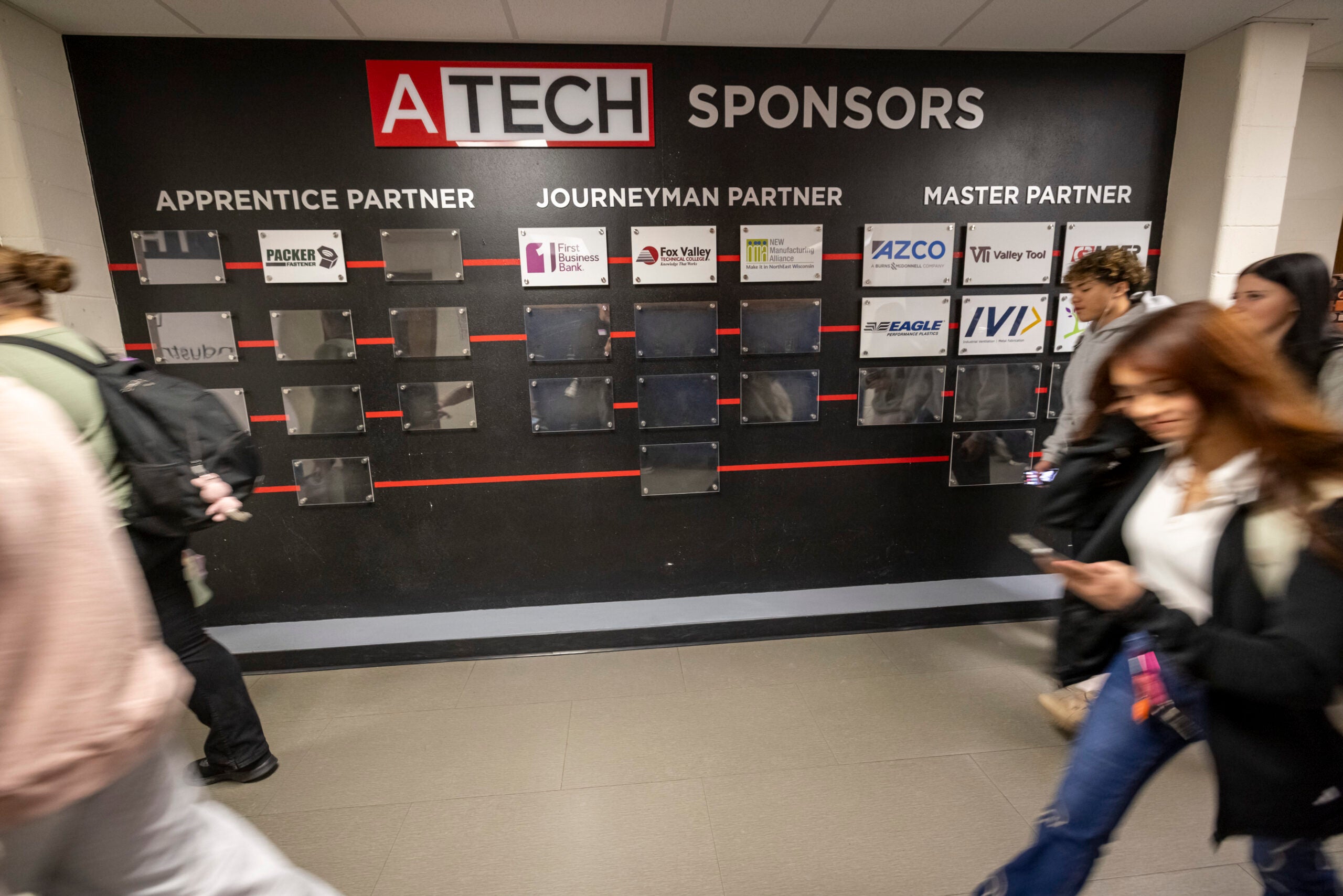
Endter jokes he wears “27 hats” trying to find it.
“Every hour that I am not teaching, including working through my lunch hour, is dedicated to phone calls, emails, site visits, networking, cold calls,” he said. “You name it. I am doing it.”
The work could soon pay off. Beginning in 2024, Appleton students between kindergarten and fifth grade began taking weekly STEM classes. Endter hopes that will spark interest in career and technical education.
“I’m on the precipice,” Endter said. “And I’m hoping that there’s going to be this giant surge of students who are looking for opportunities.”
The dilemma isn’t unique to ATECH. Many schools are eager to provide this kind of technical education, Karin Smith, a DPI education consultant, said. However, the equipment and tools are costly, and many schools are struggling to fund basic offerings. (Appleton expects a $13 million deficit this school year).
Wisconsin is one of five states that don’t designate state funding for career and technical education programs, relying solely on federal funding. Many states allocate more funding to school districts specifically for these programs because the federal dollars alone cannot meet the costs, according to Advance CTE, a nonprofit representing state career and technical education leaders.
“In Wisconsin, we have used (the federal funds) to, generally speaking, keep the lights on,” said Sara Baird, DPI’s career and technical education director.
State Superintendent of Public Instruction Jill Underly requested the 2025-27 state budget include about $45 million in career and technical education grants to districts. Gov. Tony Evers suggested a pared-down version of $10 million, whichwasscrubbed by the Legislature’s Republican-controlled Joint Finance Committee and not included in the final bill.
“We’re seeing tremendous growth and tremendous interest in expanding CTE,” Smith said. Still, school district leaders are frustrated by the lack of funding for it. “They are feeling like their hands are tied behind their back,” she said.
“We can’t do this alone … Every school has a tech ed teacher who is desperately trying to get kids excited about career pathways,” Endter said. “They need business support. They need donations. They need mentors in the classroom.”
Miranda Dunlap reports on pathways to success in northeast Wisconsin, working in partnership with Open Campus. Email her at mdunlap@wisconsinwatch.org.
This story was produced as part of the NEW (Northeast Wisconsin) News Lab, a consortium of six news outlets.