The toilet has only been a common fixture in American homes since the early 20th century. That’s when it went from being a feature in wealthy people’s homes to a public health necessity for everyone.
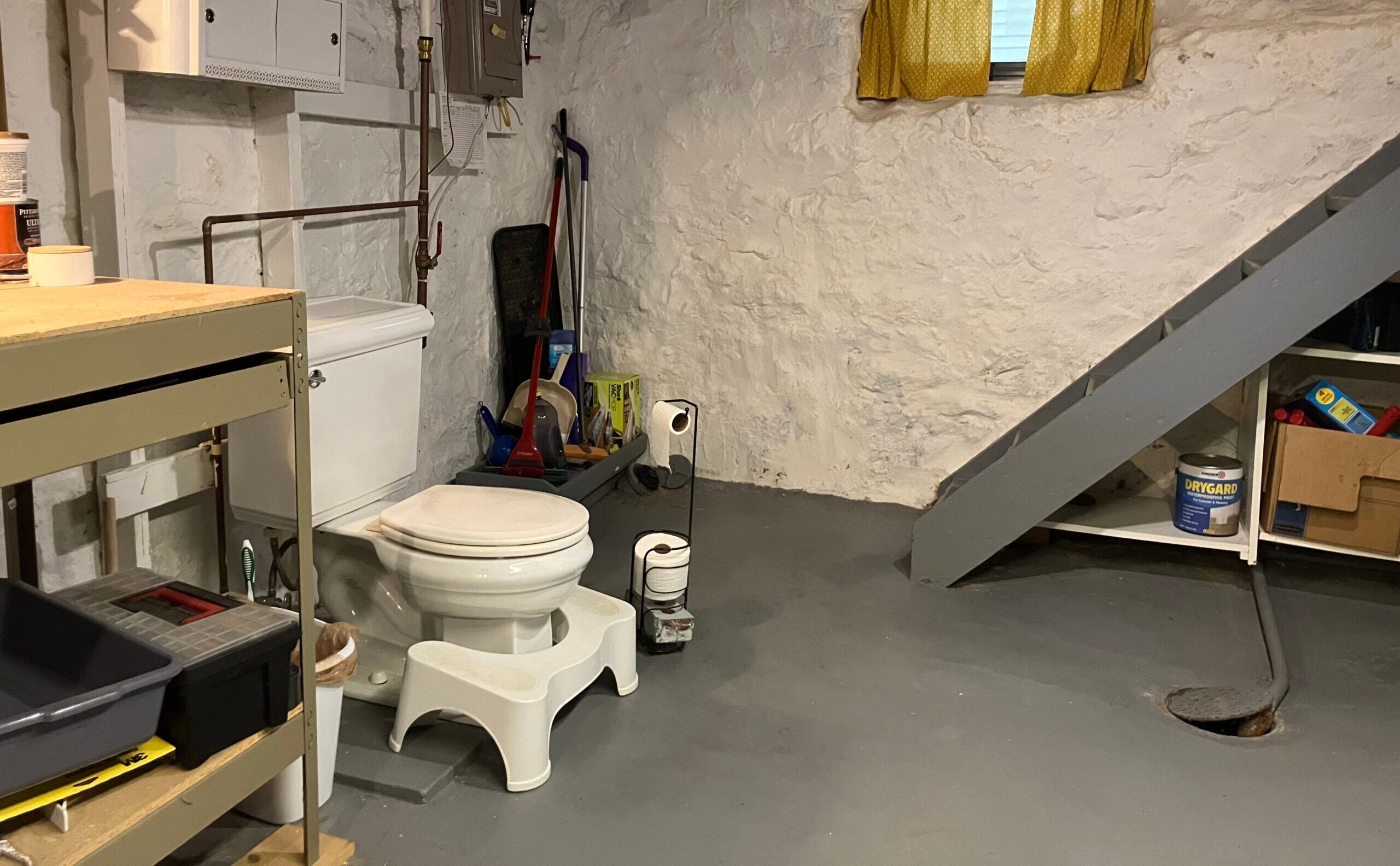
In some pre-World War II working class homes, there are basement toilets that stick out like a sore thumb. They lack privacy and can be in odd locations, like at the foot of the stairs or next to a utility sink.
These curiosities led a WPR listener in Madison to reach out to WPR’s WHYsconsin project. Jessica Hopp asked: Why do so many older homes in Wisconsin have an exposed toilet sitting in the unfinished basement? What’s the story behind the “Midwestern toilet”?
News with a little more humanity
WPR’s “Wisconsin Today” newsletter keeps you connected to the state you love without feeling overwhelmed. No paywall. No agenda. No corporate filter.
Hopp and her husband spent 2021 looking for the perfect home on Madison’s east side.
“We saw a lot of really old Wisconsin homes over the course of the next year,” she said. “The first time we walked into an unfinished basement and saw the lone, solo toilet just there with no walls around it, we laughed so hard. We’d never seen anything like that before.”

They wound up buying a home built in 1906 and — as you can probably guess — it has one of those strange basement toilets.
An OnMilwaukee article from 2022 explored the city’s basement toilet phenomenon, suggesting there are reasons for their strange placements.
Bobby Tanzilo, senior editor and writer at OnMilwaukee, said his research turned up different explanations for why basement toilets came to exist in many older working-class homes.
“One of the reasons for this toilet — it’s not the one people like to think about — but it’s the one that seems to probably be the real origin of this: Before there were floor drains, they wanted to have a basement receptacle where if water were to back up from the sewer, it would not back up into your house. It would back up into the basement,” he said.
Tanzilo found other explanations for the basement toilets. The basement was an affordable space to install plumbing, sometimes leading to a home’s first toilet. It was also a place where someone could go after work to get cleaned up. There are occasionally showers near the toilet.
Tanzilo said the story affirmed for him that there is often no simple explanation as to why something exists.
“I think those are all probably good and valid reasons,” he said. “So sometimes while we want one nice, easy, clean reason, sometimes we get three reasons that include sewer back-ups.”
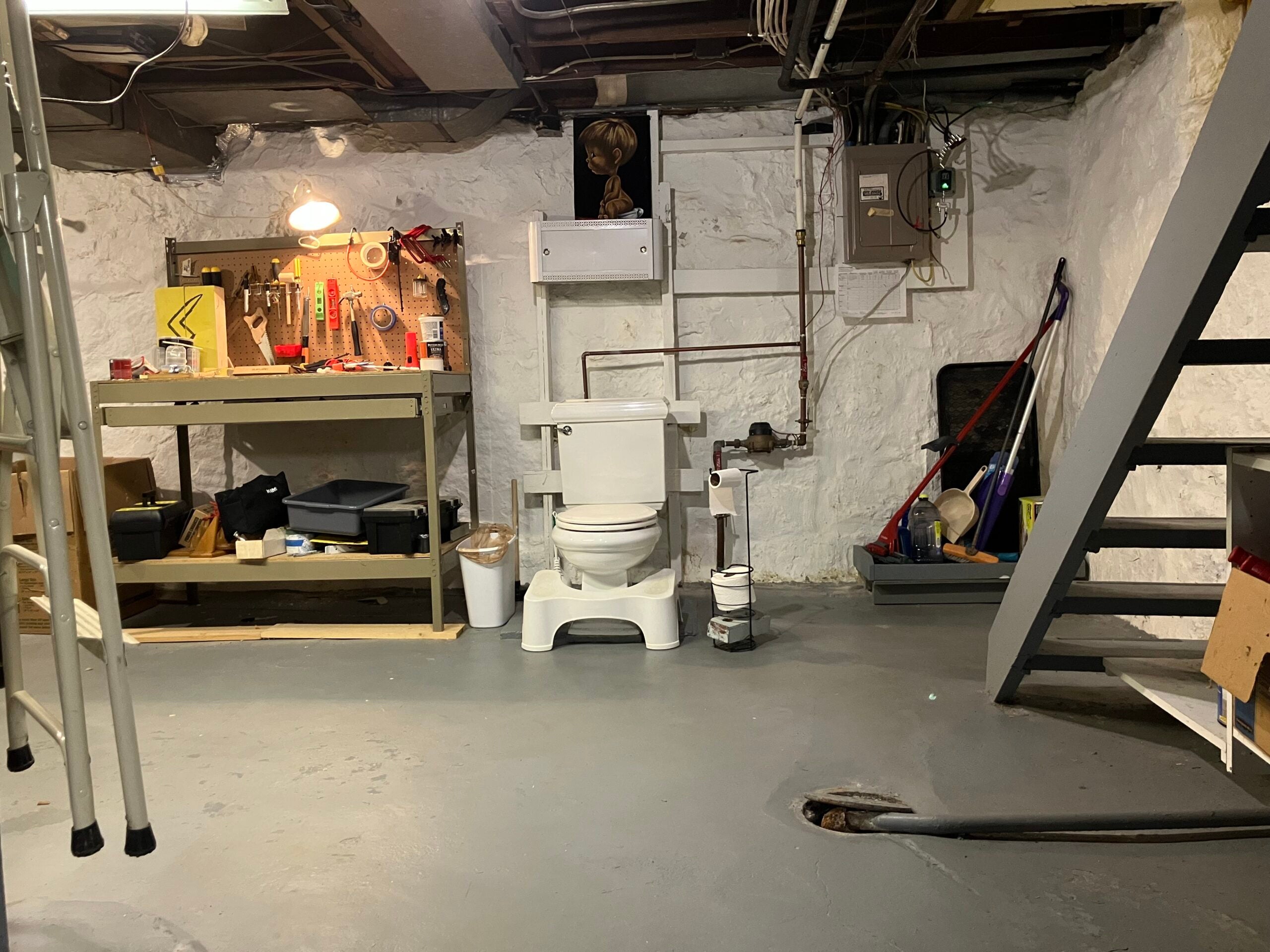
The basement toilets aren’t unique to Milwaukee or even the Midwest. In fact, they are often referred to as “Pittsburgh potties” because of their prevalence in western Pennsylvania homes. Other stories place them in homes in the neighboring states of Illinois and Minnesota. In addition to Milwaukee and Madison, our research found older homes with basement toilets in La Crosse and Mount Horeb.
A University of Wisconsin-Milwaukee professor emeritus who wrote the book, “How the Working-Class Home Became Modern, 1900-1940,” has knowledge of the basement toilets.
Thomas Hubka, who taught in the university’s School of Architecture & Urban Planning, said the toilets exist in homes across the country but are more prevalent in the eastern U.S. and Midwest since those regions are more likely to have a basement.
He said basement toilets built before World War II in Wisconsin likely exist in more urban areas.
“In rural Wisconsin, there could be few basement toilets like this. It’s not one of the things that is part of the ethos of farm life in some ways, going into the basement to clean up or something like that,” Hubka said. “In 1900, half of the state is farms, so within the urban/small town context, here we have the basement toilet.”
The Madison home Jessicca Hopp lives in has an exposed toilet near the base of the basement stairs.
“I thought it was a little silly,” she said. “But as this is a one-bathroom home and we have a teenager who often has a gaggle of other teenagers over, having a second toilet is delightful. So, people end up using it all the time.”

“Wisconsin Life” is a co-production of Wisconsin Public Radio and PBS Wisconsin. The project celebrates what makes the state unique through the diverse stories of its people, places, history and culture.