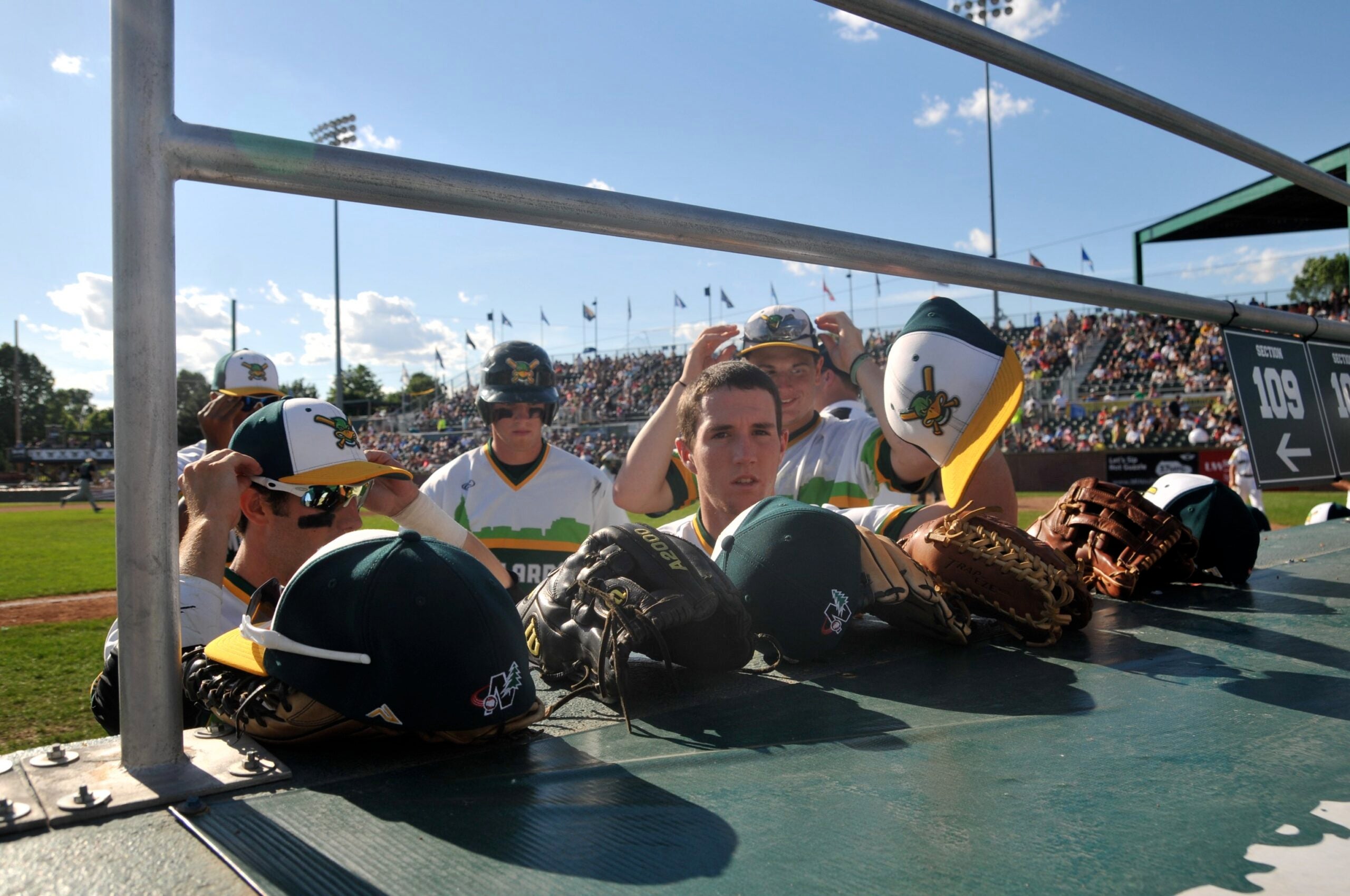
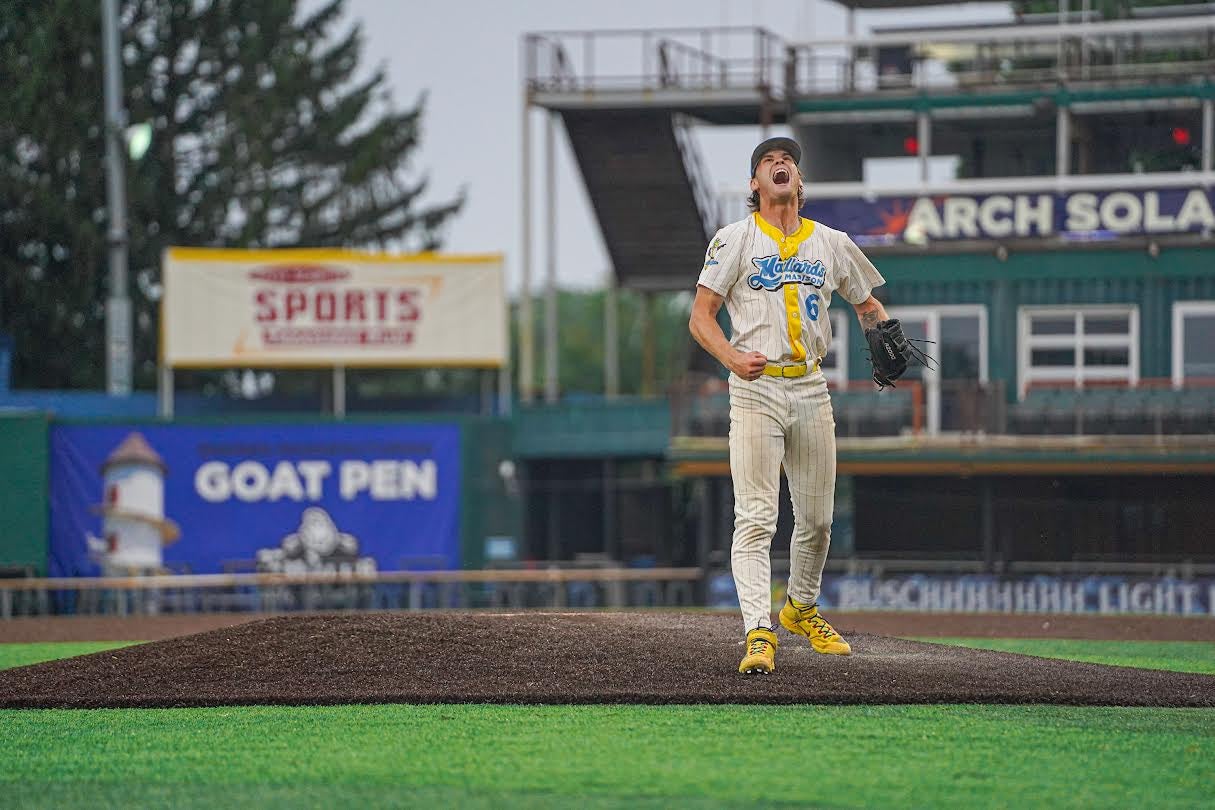
Baseball teams in the Northwoods League will head to Madison this week for the league’s all-star game Wednesday evening. They’ll be competing at the Duck Pond, home of the Madison Mallards.
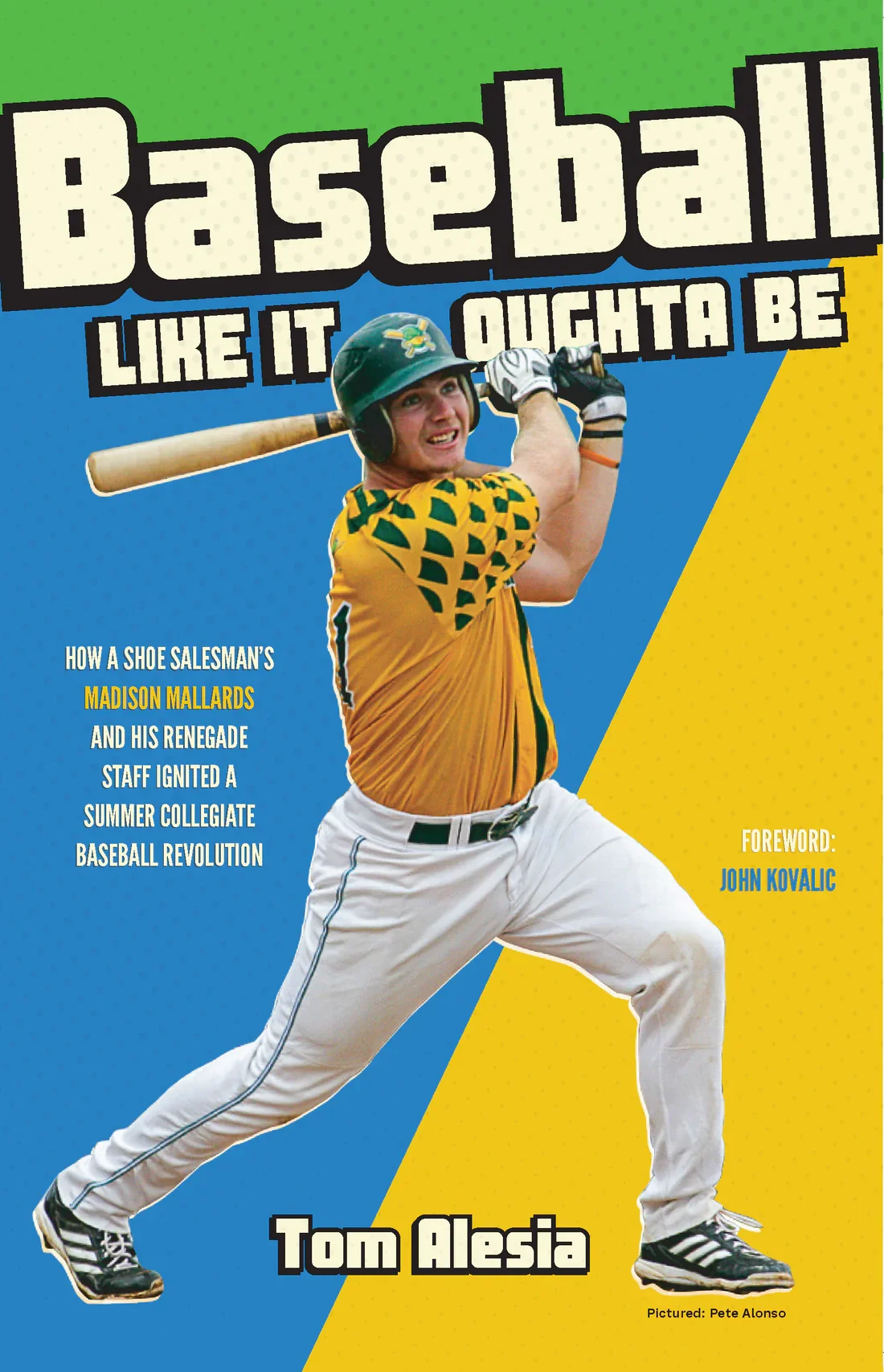
Tom Alesia is the author of a recent book, “Baseball Like It Oughta Be,” which details the successful and sometimes quirky history of the Mallards. In writing his book, he gathered stories and history from Mallards owner Steve Schmitt — who owns the iconic Black Earth shoe store, The Shoe Box — and team president Vern Stenman.
“Getting to interview both of them and digging into their stories was probably one of the most enjoyable parts of the book,” Alesia told WPR’s “The Larry Meiller Show.“
News with a little more humanity
WPR’s “Wisconsin Today” newsletter keeps you connected to the state you love without feeling overwhelmed. No paywall. No agenda. No corporate filter.
Alesia and Stenman, who also joined the show, say Schmitt has played a critical role in not only the stellar performance of the Mallards, but the strong community that’s fostered at games.
They both place a strong emphasis on simply having fun.
“It’s fun, you know. And that’s the common denominator from day one to today,” Stenman told Larry Meiller. “And all the things that I think Tom captured very nicely in the book is that … if we’re not having fun doing something in the work that we’re in, we probably shouldn’t be doing it. And that’s become a rallying cry for us.”
This transcript has been edited for brevity and clarity.
Larry Meiller: Tom, what inspired you to write about the Mallards?
Tom Alesia: As a Madison resident, every year, I’m fascinated by the fact that the Madison Mallards continue to draw more than 200,000 fans a season. And to put that in perspective, there are 80 collegiate summer leagues nationwide, hundreds of teams, and no one is near them. And what should happen is it should start to tail off a little interest. But instead, the interest just keeps going and going and going. And they did it without becoming the Savannah Bananas and going truly outlandish on the field. So that success fascinated me, and sure enough, it turned into a very entertaining and fun book.
LM: Vern, that first Mallards game — what was that like?
Vern Stenman: It was cool because in that moment, no one expected us to succeed. You know, it’s hard probably for a lot of people to go back to that moment in time. But there had been three teams that had failed at Warner Park in, I think, the previous seven years before we came in. I was 23 years old. Steve [Schmitt] had never done anything really in the sports and entertainment space before, and we didn’t know what we didn’t know, I guess. And we just said, let’s go out and let’s have fun.
I think we drew right around 1,000 fans to that very first game. And at the time, that was a great crowd, you know, that was a good night. We go on to play the rest of the month of June and I don’t think we get a crowd over 200. So we were probably a little overly excited by that first night. But it was always fun, and that’s been kind of the common thread, I think, from that very first day until right now.
LM: Tom, what stands out to you about the Mallards?
TA: Steve Schmittt’s commitment. The team has done well, and then the team has done well financially. And Steve Schmitt, instead of walking away — and this is true of Vern, too — they didn’t just stop and cash in. Steve Schmitt in particular keeps putting the profits that he makes and the money back into the team, and that’s what makes it so exciting.
There’s a video board that was put up last year that I think would be an envy of just about every single minor league team and maybe one or two major league teams. It’s enormous. It’s an incredible part of what they’ve done with Warner Park.
You gotta go back to when Vern is talking about that first game, that first year, 2001 — Warner Park was not the Warner Park that it is today. Warner Park, the Duck Pond, was a very struggling facility. And over the years, Steve has put in money to make sure that it is a fantastic facility.
LM: Tom, you write about Steve and the name, the “Mallards.” It goes back. It’s a fun story. How did he come up with that name?
TA: He was one of the eight owners of a minor league hockey team called the Madison Kodiaks, and they lasted one season in the late 1990s. They were not successful. All of the owners lost some money. But one team caught his eye. It was the Quad Cities Mallards, a hot minor league hockey team that came to Madison. And when they came to Madison, they would also bring two or three busloads of their fans, and their fans just loved it.
And to Steve, that’s what he wanted. When he began owning a baseball team, he wanted that kind of enjoyment from fans. And as a result, and almost as a homage to the hockey team, the inspiration, he wanted the team called Mallards.
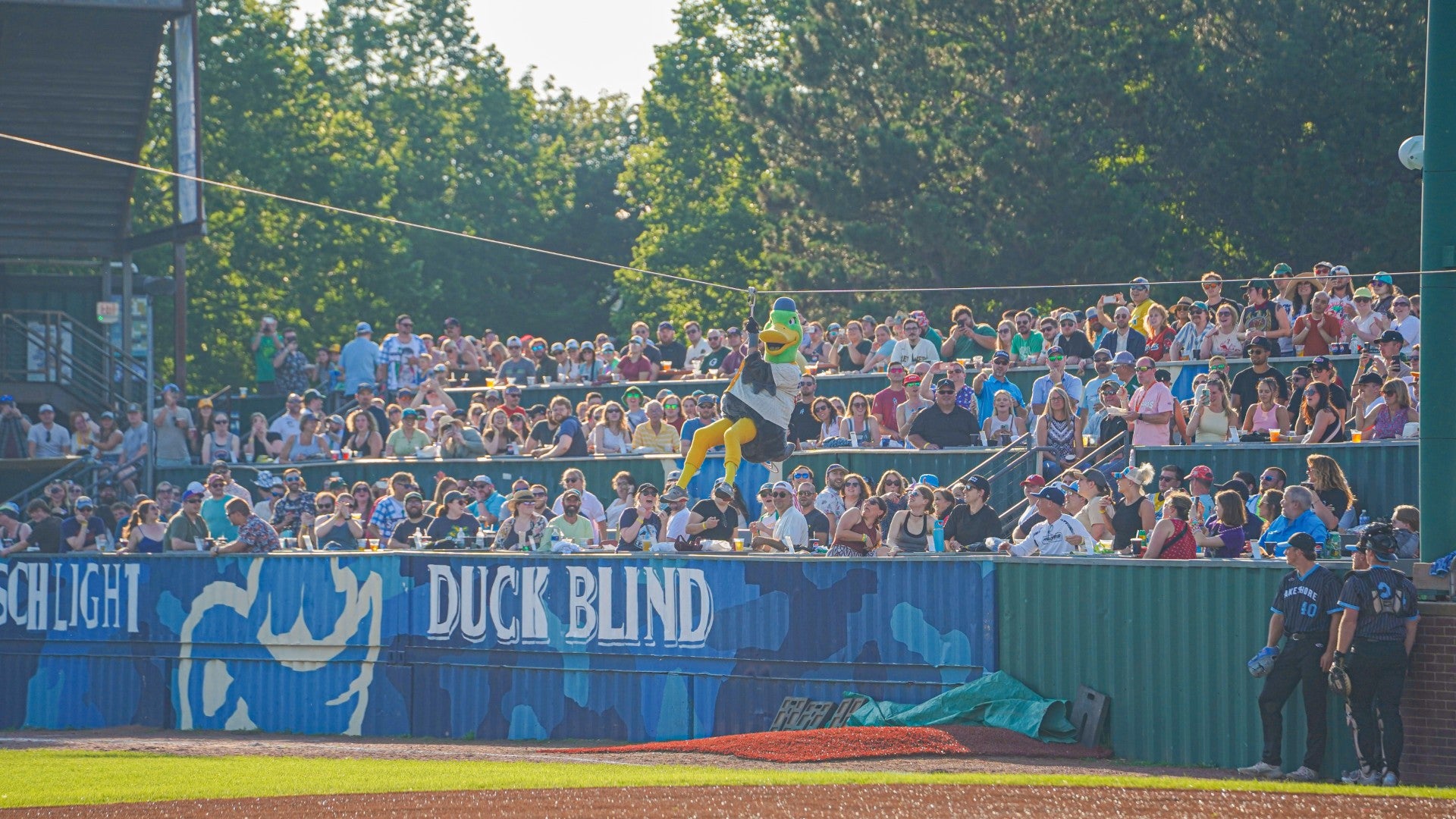
Duck Blind stories
LM: Tom, you write about the many, many ways — and Vern, of course, can back this up — that make the game more than a game, just a lot of fun community and the giveaways and everything that go on are amazing.
TA: I mean, some of the promotions have been absolutely outrageous. They did the world’s largest old fashioned two years ago. One year, they let fans, if they got a permanent logo of the Mallards tattooed, they would be allowed for free in the Duck Blind. The Duck Blind is all you can eat, all you can drink. Forty people took them up on it. There was still a line. They weren’t able to get a tattoo on everybody.
There’s the green morph suit. A person in an all green outfit between innings, jumping onto the field. Everybody in that stadium thought it was real. This is about 12 years ago, 12-13, years ago. I saw it on YouTube — I thought it was real.
And he runs across. Then six of the Mallards employees — all looking like security — never caught him and he exited the stadium. The announcer played it perfectly. It was beautifully done. It ended up being on Jimmy Kimmel, on his show that night on national TV.
TA: [The Mallards] were playing a team called the Alexandria Beatles. And fans could get in for free if they ate an edible bug. And many did, 250.
VS: We ran out of beetles. And I’ll never forget: There were, like, pretty young college girls coming up and eating beetles, and I was giving them to them, and they were, like, mad that they didn’t get the bigger beetle. You know, it was a weird thing, and it’s funny — that actually led to the parks commission in Madison requiring us to get permission for all of our promotions moving forward. Somebody on the parks commission didn’t think it was as funny as I thought it was. And ever since we did that back in probably 2012, we have to go every January to the Parks Commission with our ideas and make sure that they’re all comfortable with the things that we’re doing. But that actually got us international media attention when we did the stupid little beetle thing.

Wisconsin Public Radio, © Copyright 2026, Board of Regents of the University of Wisconsin System and Wisconsin Educational Communications Board.