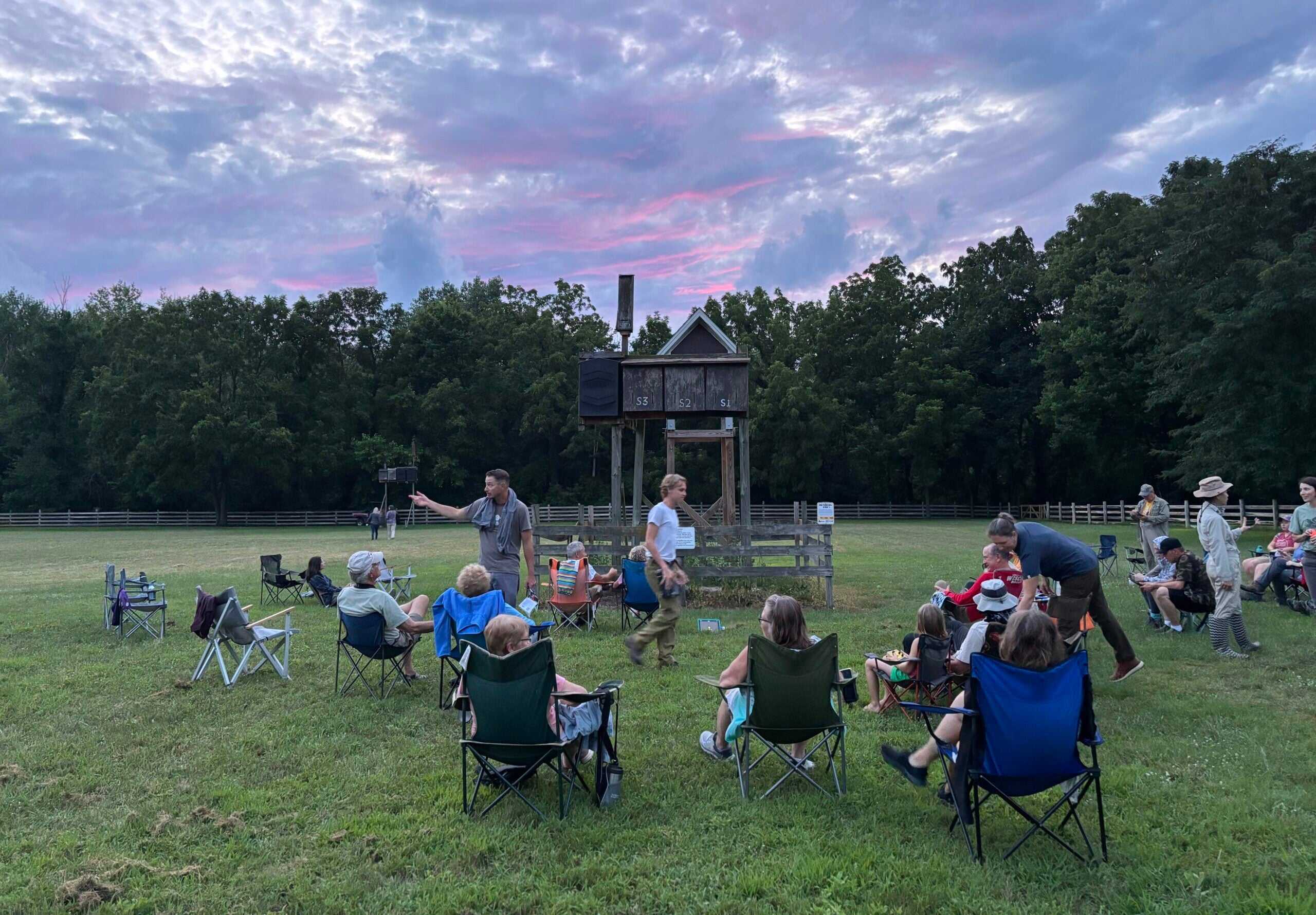
It was 4 a.m. and dark. J. Paul White greeted about 20 people. He’s the bat program lead at the Wisconsin Department of Natural Resources’ Bureau of Natural Heritage Conservation.
“There must be a lot of birders here, you guys are ready to go,” White whispered.
The group found their seats and waited quietly for the show to start. As the sun slowly rose, we started to see the bats — dancing.
News with a little more humanity
WPR’s “Wisconsin Today” newsletter keeps you connected to the state you love without feeling overwhelmed. No paywall. No agenda. No corporate filter.
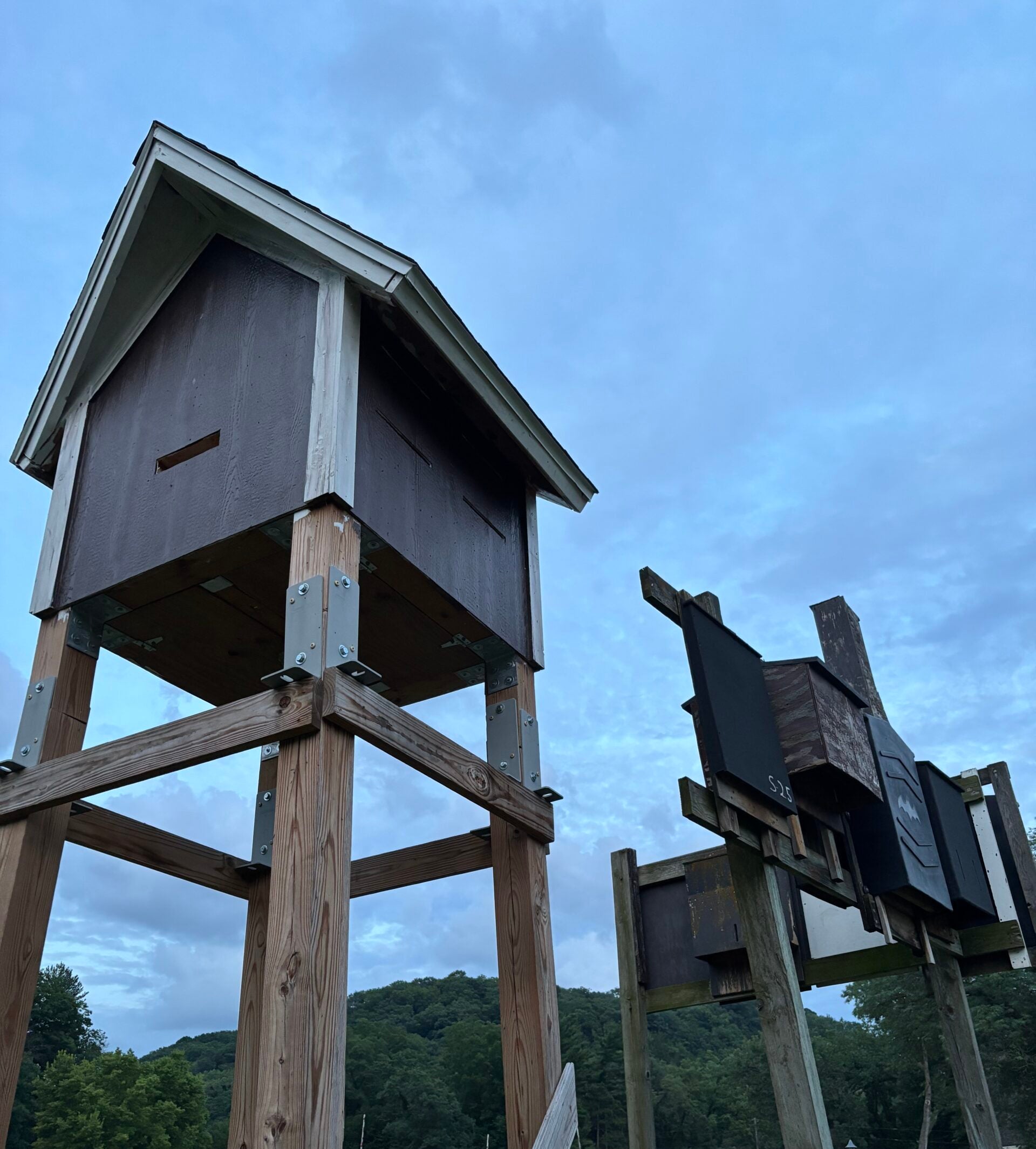
This field trip to Nelson Dewey State Park was organized by the Natural Resources Foundation of Wisconsin, a nonprofit that works to protect the state’s lands, waters and wildlife. This particular group camped out to see the Stonefield colony of little brown bats as they emerged to feed at sunset.
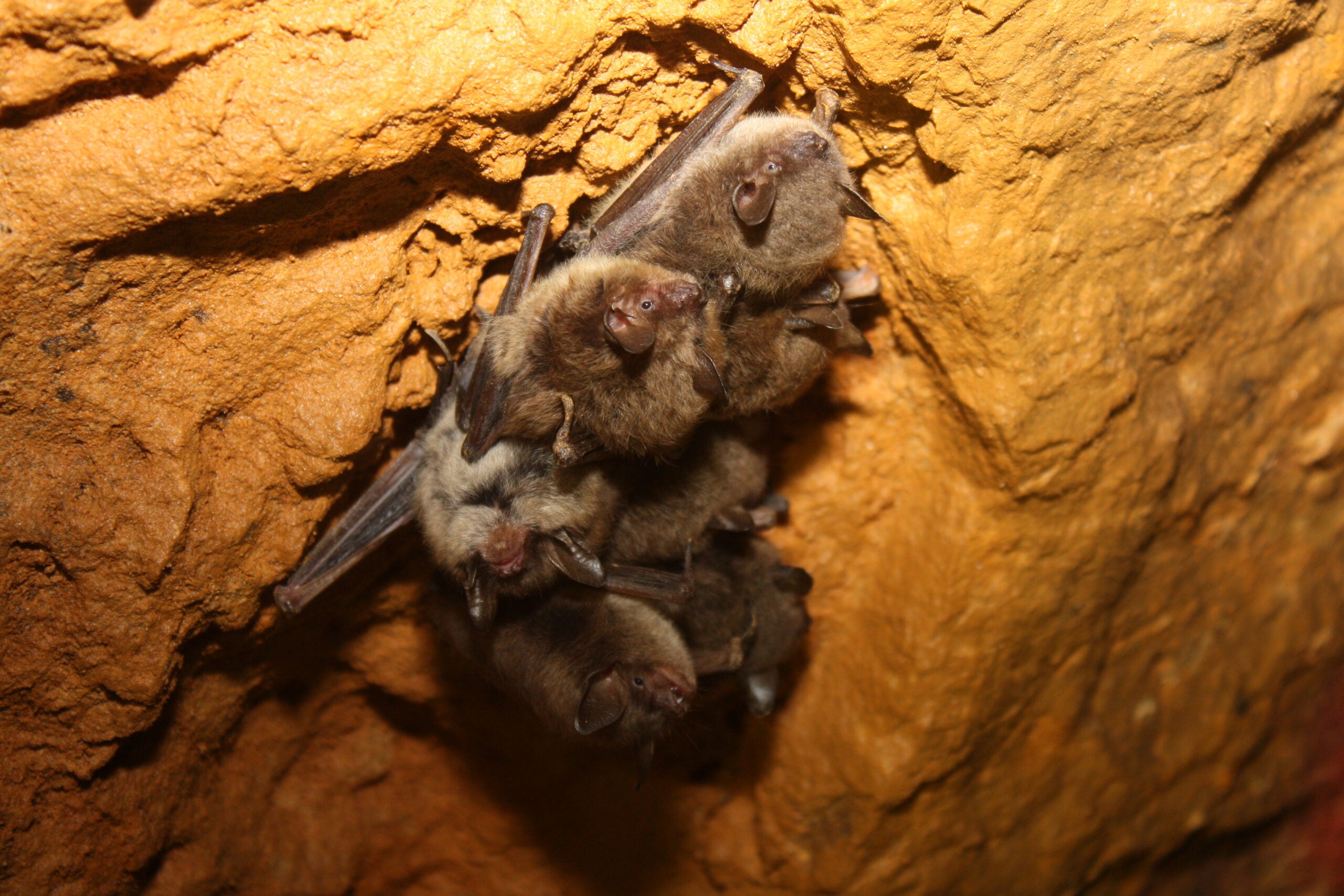
We were also there to witness the bats’ return as a swarm at dawn: all 3,000 of them.
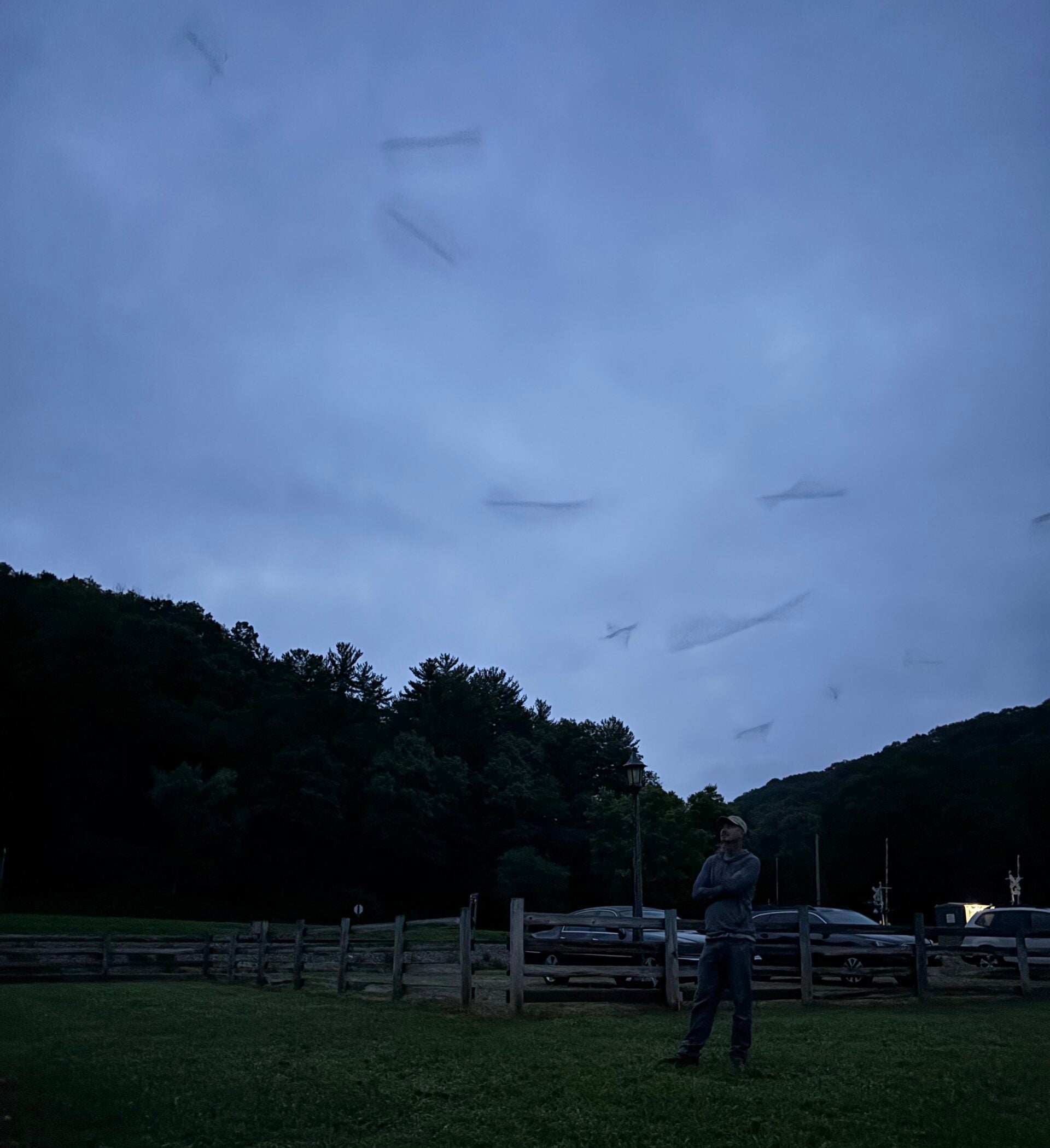
“It’s the beauty of morning swarm that we really want to be able to show people, and that’s why this field trip is special,” said Jennifer Redell, conservation biologist with the Wisconsin DNR.
Redell said she enjoys giving people the opportunity to get up close and personal with an animal that is often misunderstood or unnoticed.
“To get up well before sunrise is a bit of an ask, but it’s one of the most beautiful and mysterious wildlife phenomena that happen every morning in the summer outside every major bat roost across the state, and people don’t know about it,” Redell said. “It’s this really cool way to experience bats up close.”
Wisconsin hosts nearly half of little brown bats nationwide
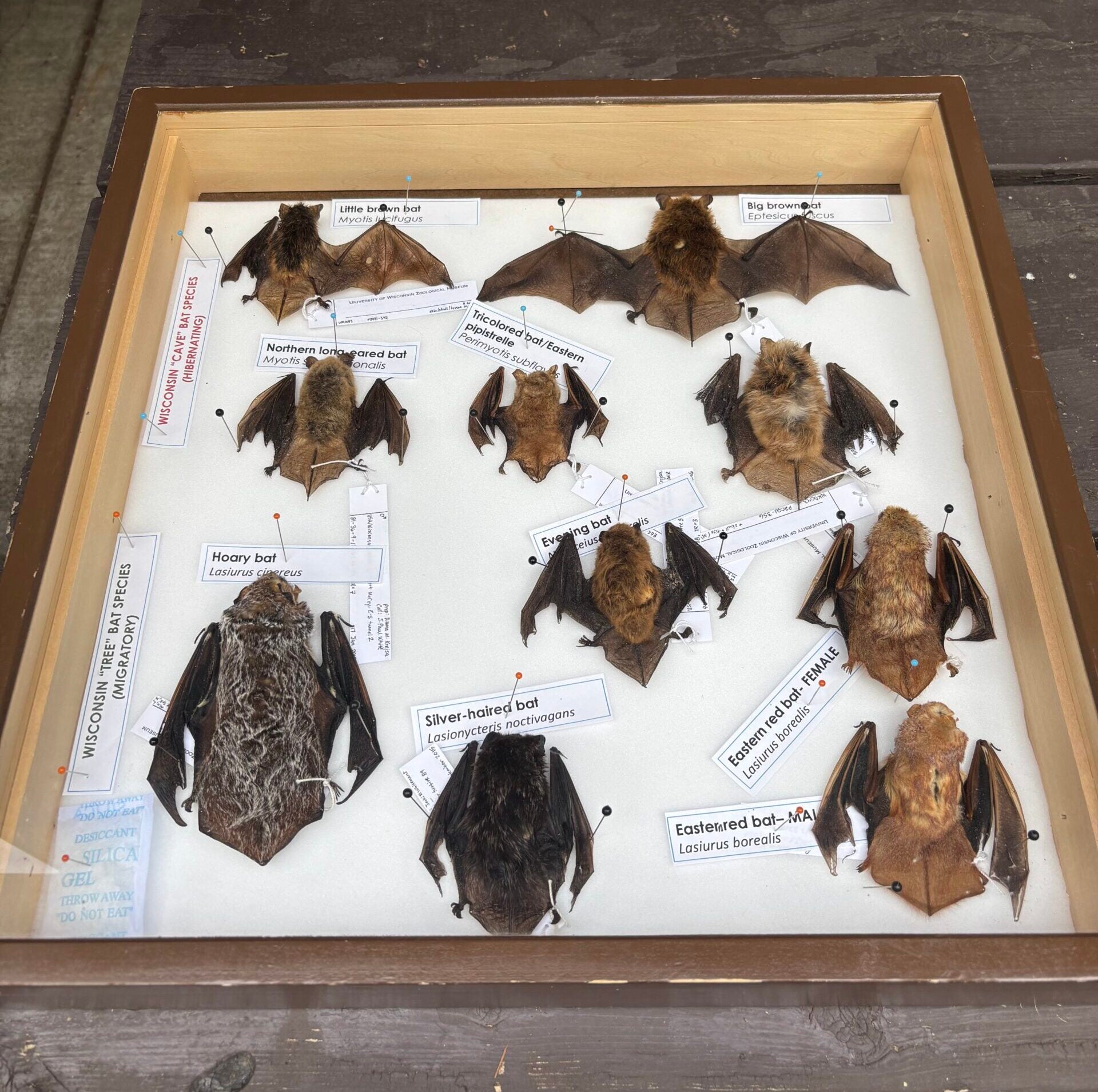
According to Redell, the state of Wisconsin plays an especially important role for little brown bats in the U.S. Nearly half of little brown bats in the country hibernate in just a few Wisconsin mines.
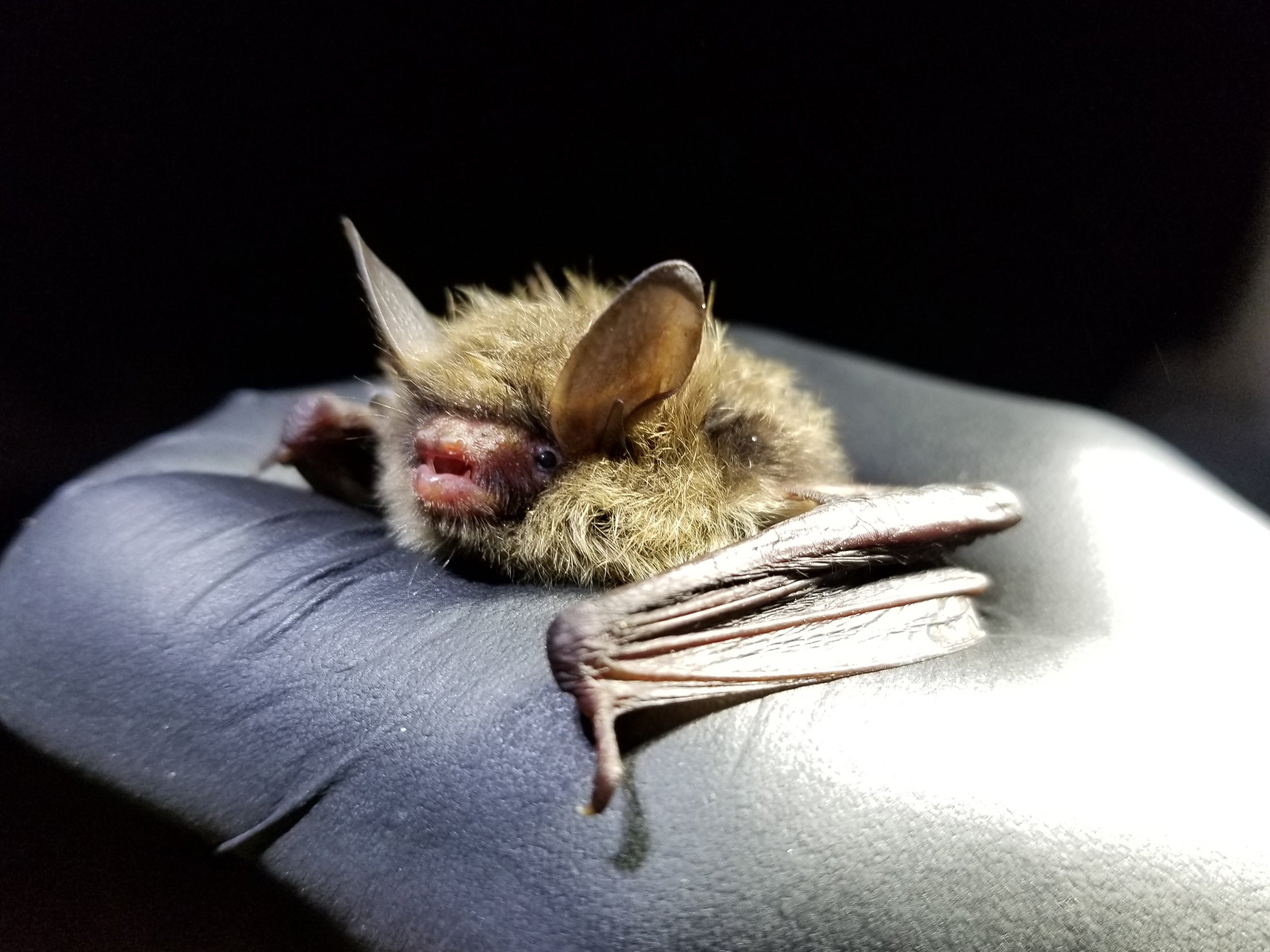
Little brown bats are endangered in the U.S. Like many species of hibernating bats, their population has been threatened by a fungal infection called White Nose Syndrome. But in recent years, Wisconsin’s little brown bats have shown signs of recovery.
That population data is thanks in part to bat monitoring efforts by citizen scientists in Wisconsin. On the NRF field trip, some group members were tasked with counting the bats as they flew out of their roost at night.
Each year, the Natural Resources Foundation of Wisconsin organizes hundreds of outings to get people in touch with the natural world and show them conservation projects — like bat monitoring — in action.
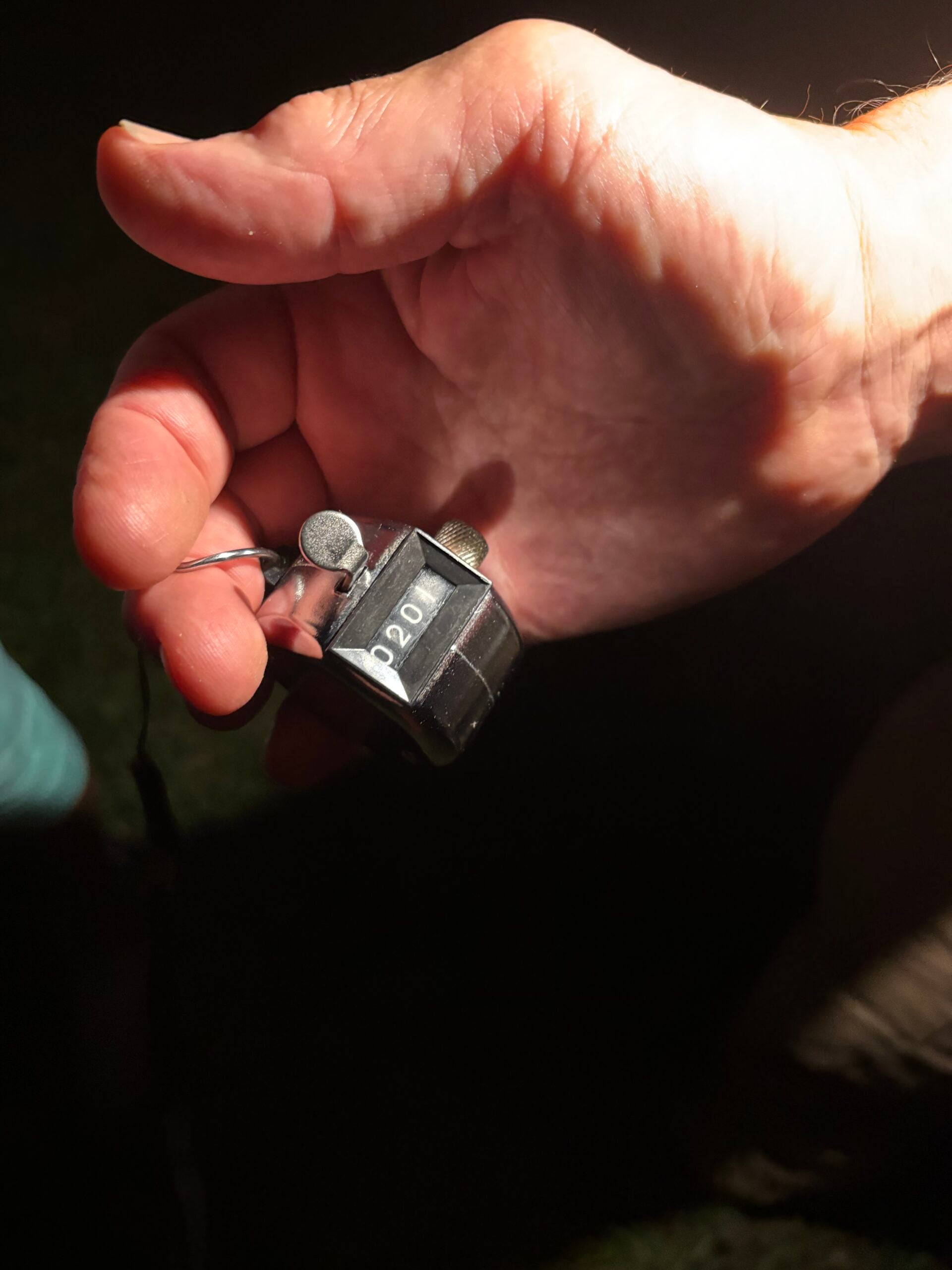
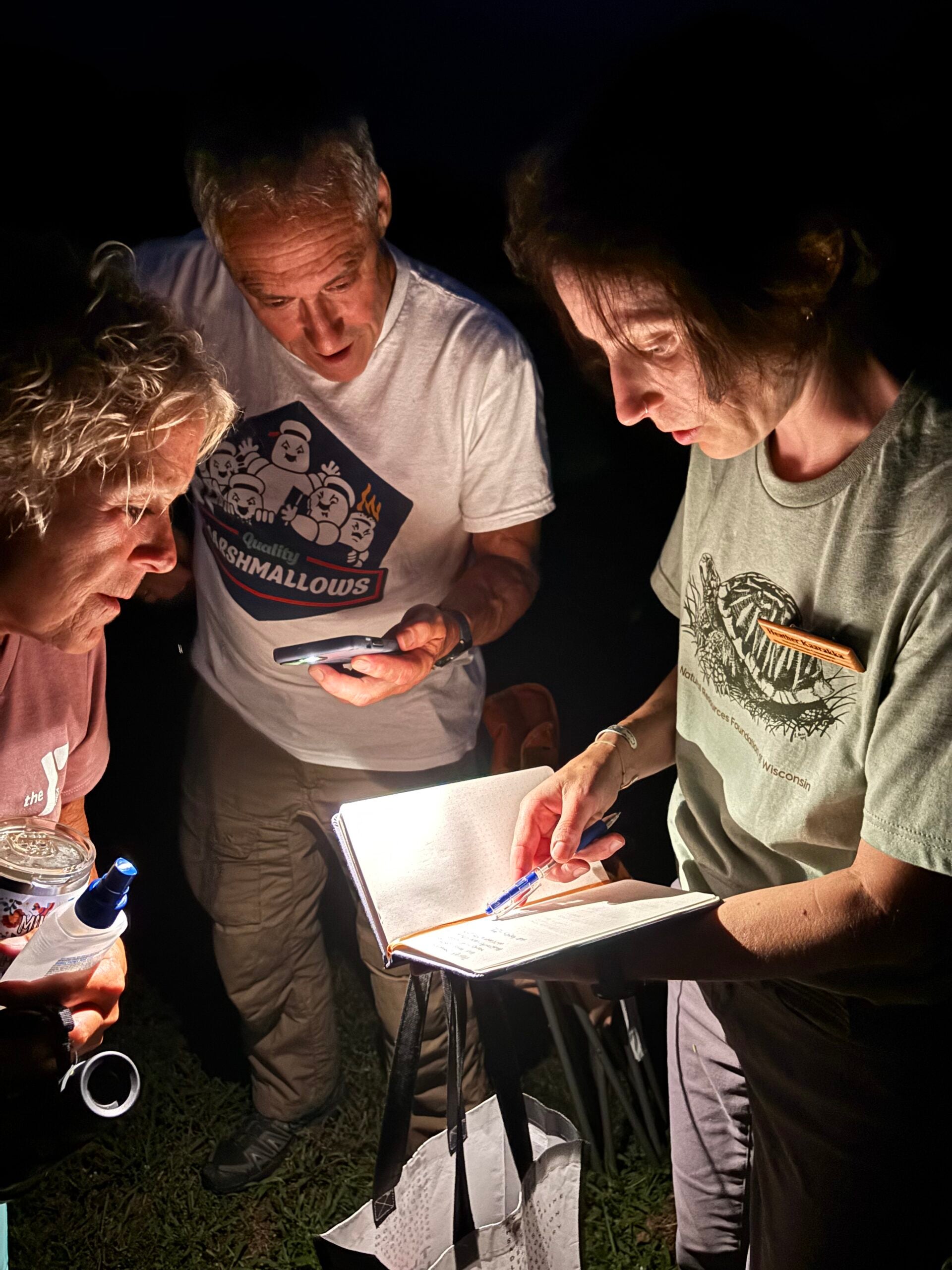
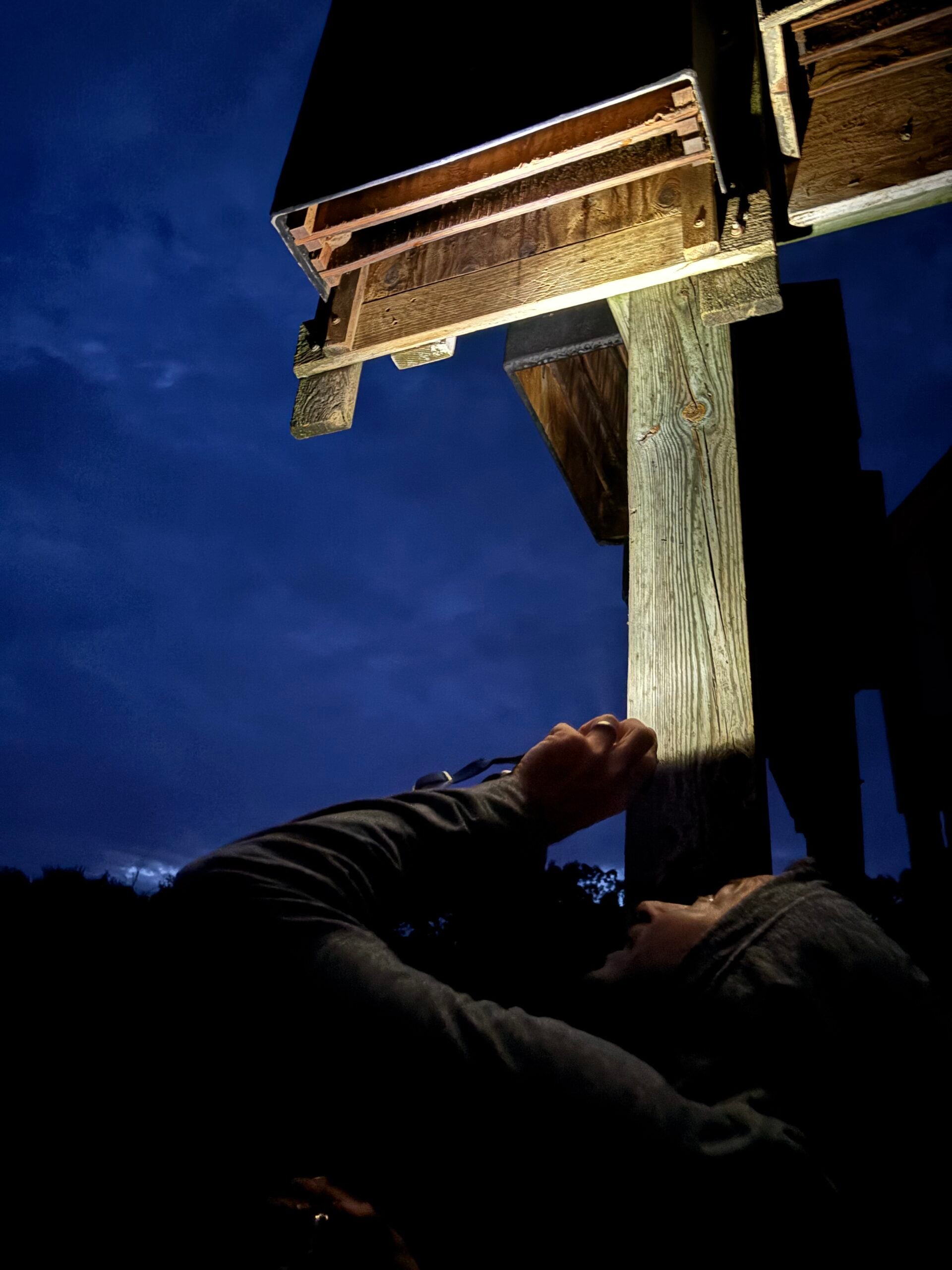
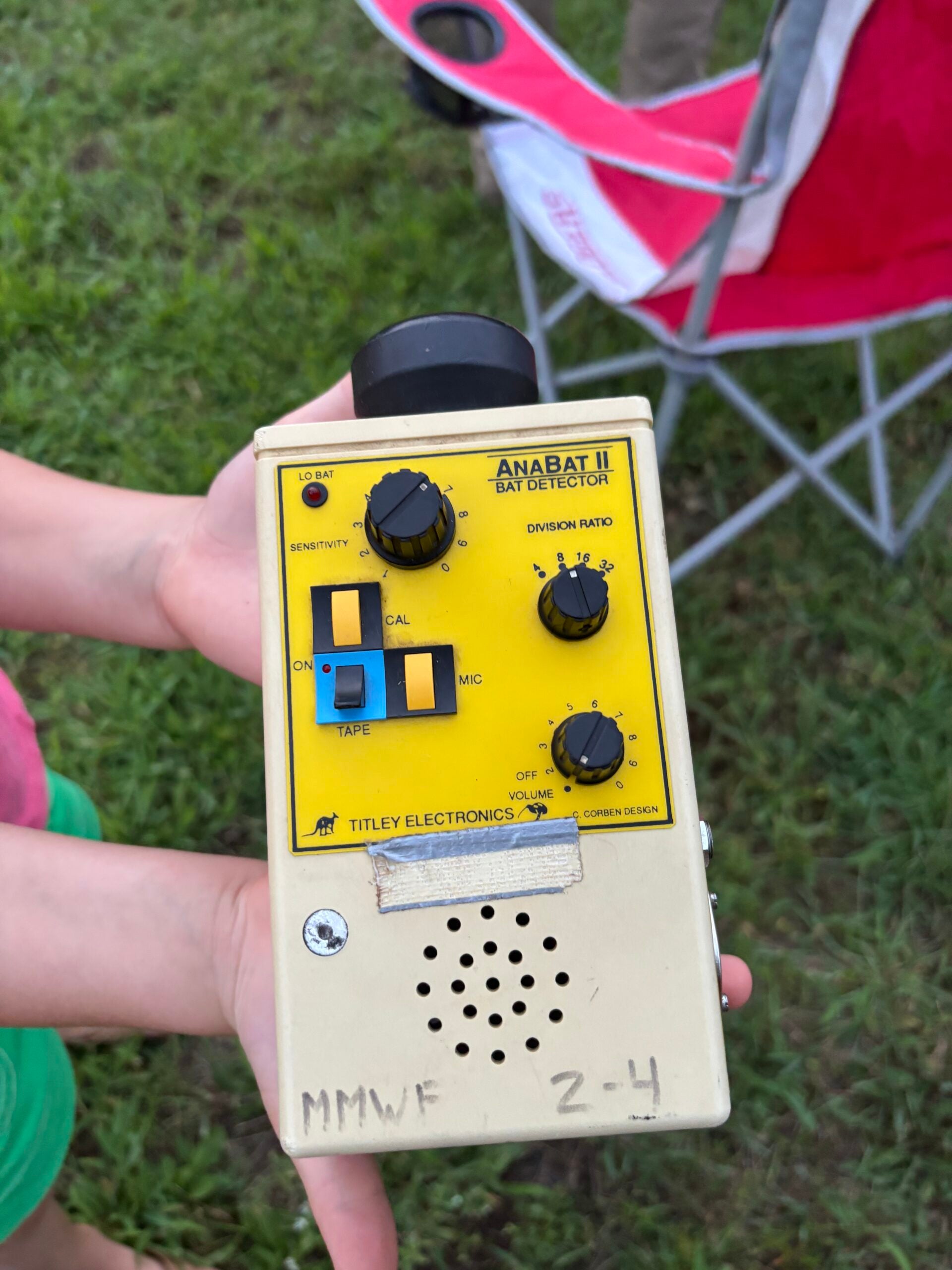
Bat monitoring activities on the NRF bat field trip. Top left: Field trip attendee Mike Wallace holds out his bat counter for the box he was monitoring, which reads 201. Top right: Jane Shea, Mike Wallace and Heather Kaarakka document bat numbers. Bottom left: J. Paul White counts bats that didn’t leave the roost. Bottom right: An old-school bat detector, which picks up echolocation calls and amplifies them for humans to hear. Beatrice Lawrence/WPR
Redell said the bat trip is especially powerful, and people might even come out the other side as bat lovers.
“Nobody wants to get up at 4:00 in the morning to watch it — until you’ve seen swarm, and then you’re addicted,” Redell said.
The expedition was full of field trip veterans, like Henry Niels-Lowe of Fitchburg.
“They are amazing. All of them are fabulous,” Niels-Lowe said. “I have monarch tagging and hummingbird tagging coming up. I’ve seen so many remarkable things going out and learning about different places I’ve never been.”
A mysterious dance of 3,000 bats
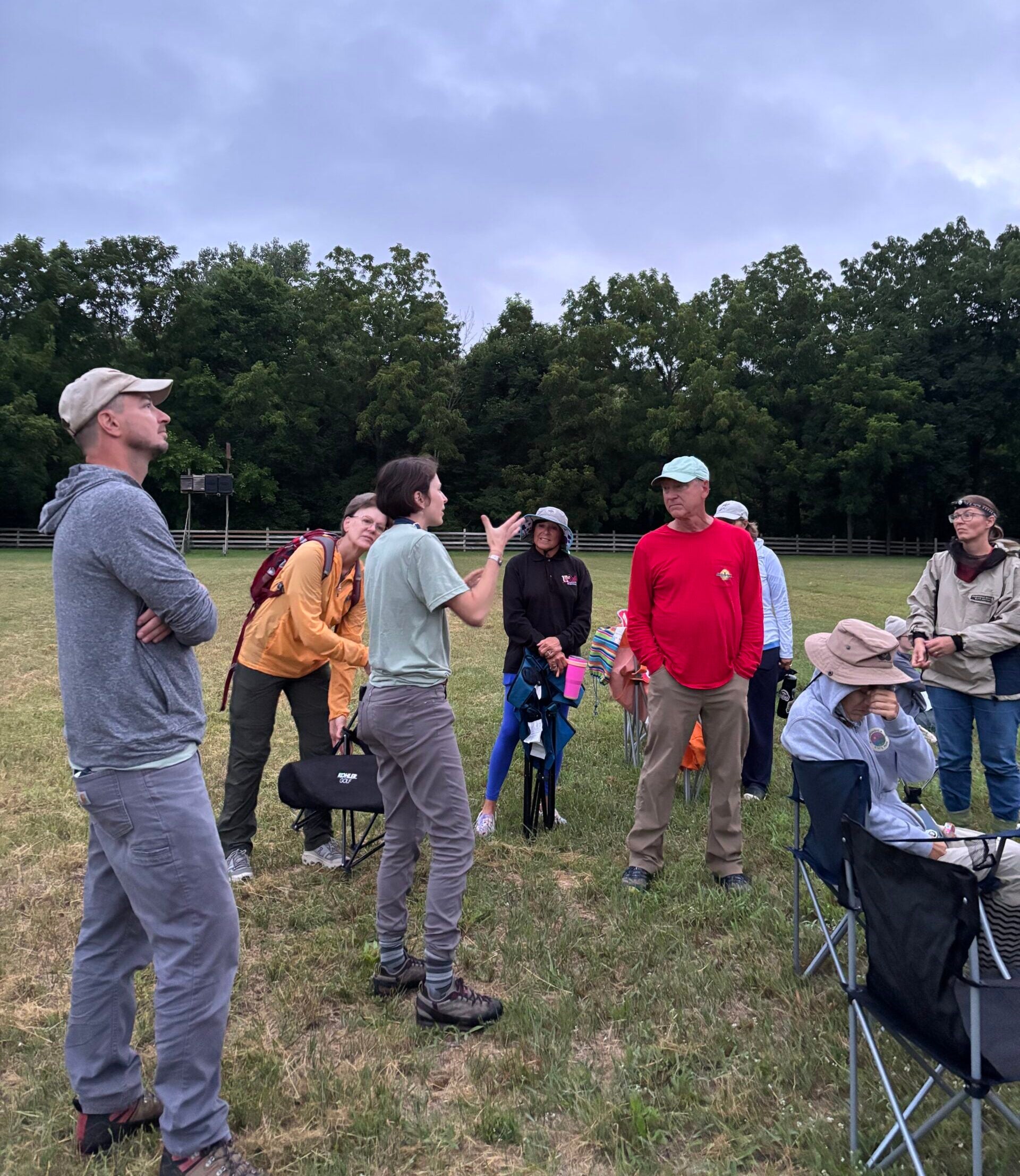
Wisconsin DNR conservation biologist Heather Kaarakka said scientists aren’t sure why bats swarm at their roost sites in the morning. But she said their best guess is that it’s a way to communicate with other bats.
“It’s an indication to other members of the colony that not only is there a roost site here, but they’re also communicating to other members of the colony, ‘Hey, I’m going to use this box today,’” Kaarakka told the field trip group.
Against the sunrise, thousands of little brown bats flew around our heads. There were so many, it was a wonder they didn’t hit each other. Or us.
The DNR’s J. Paul White prepared the group for the jaw-dropping experience. The previous night, he told us all to close our mouths to avoid the “bat kiss,” also known as guano.
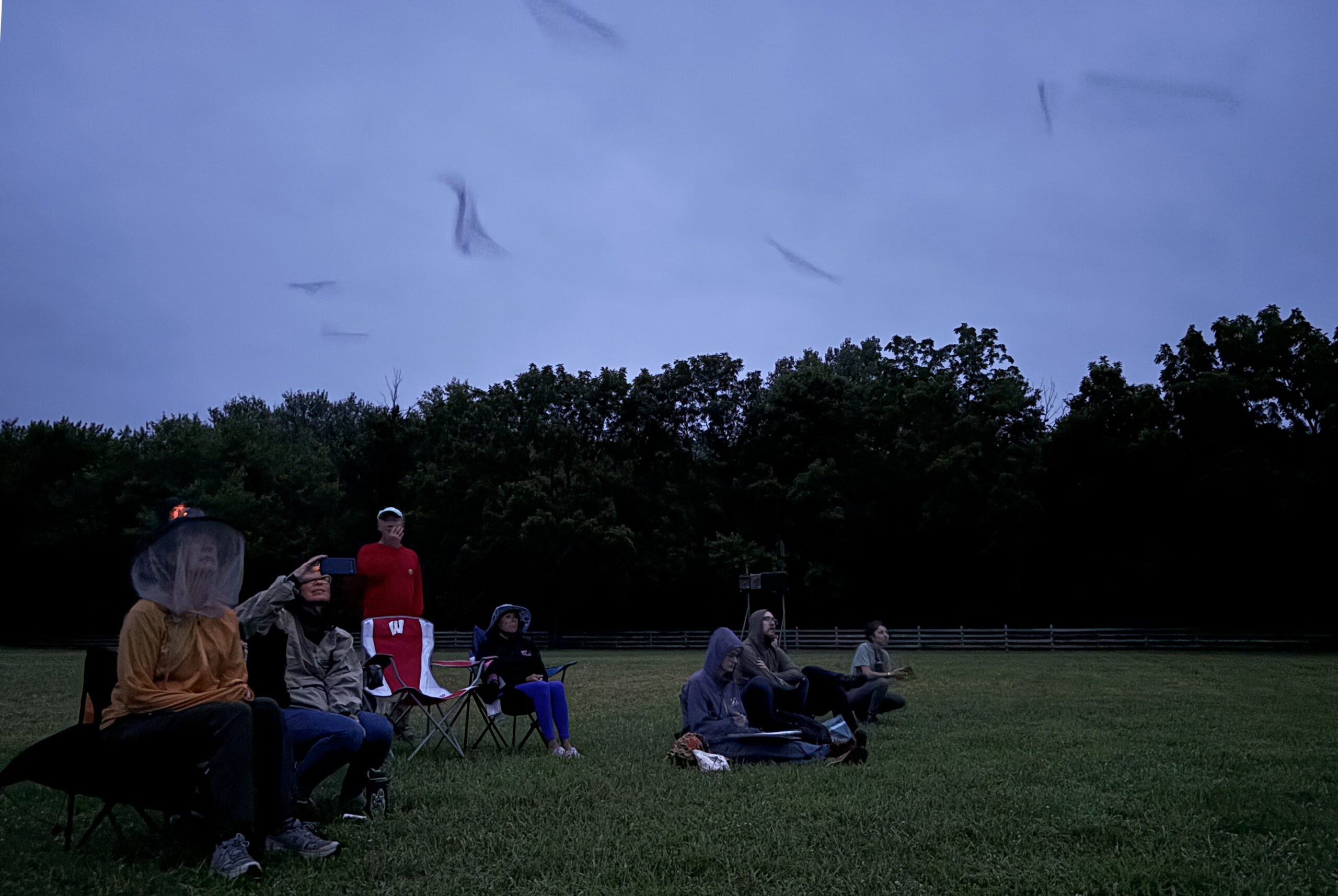
The previous night, the bats left their homes and immediately flew away to eat. But in the morning, the bats took their time returning to their boxes. The swarm grew as they danced around each other, occasionally squabbling or flying smack into the side of the boxes.
As the bats finally made their way back into their boxes, it fell silent.
The spectators were in awe.
“It was amazing,” said Alex Elman of Appleton. “There were so many. They would come at you and then split, kind of like the Red Sea, and then circle around. And all of the sudden, as it got a little bit lighter, I was like, ‘Oh, my God, there’s so many bats.’ It was so cool.”
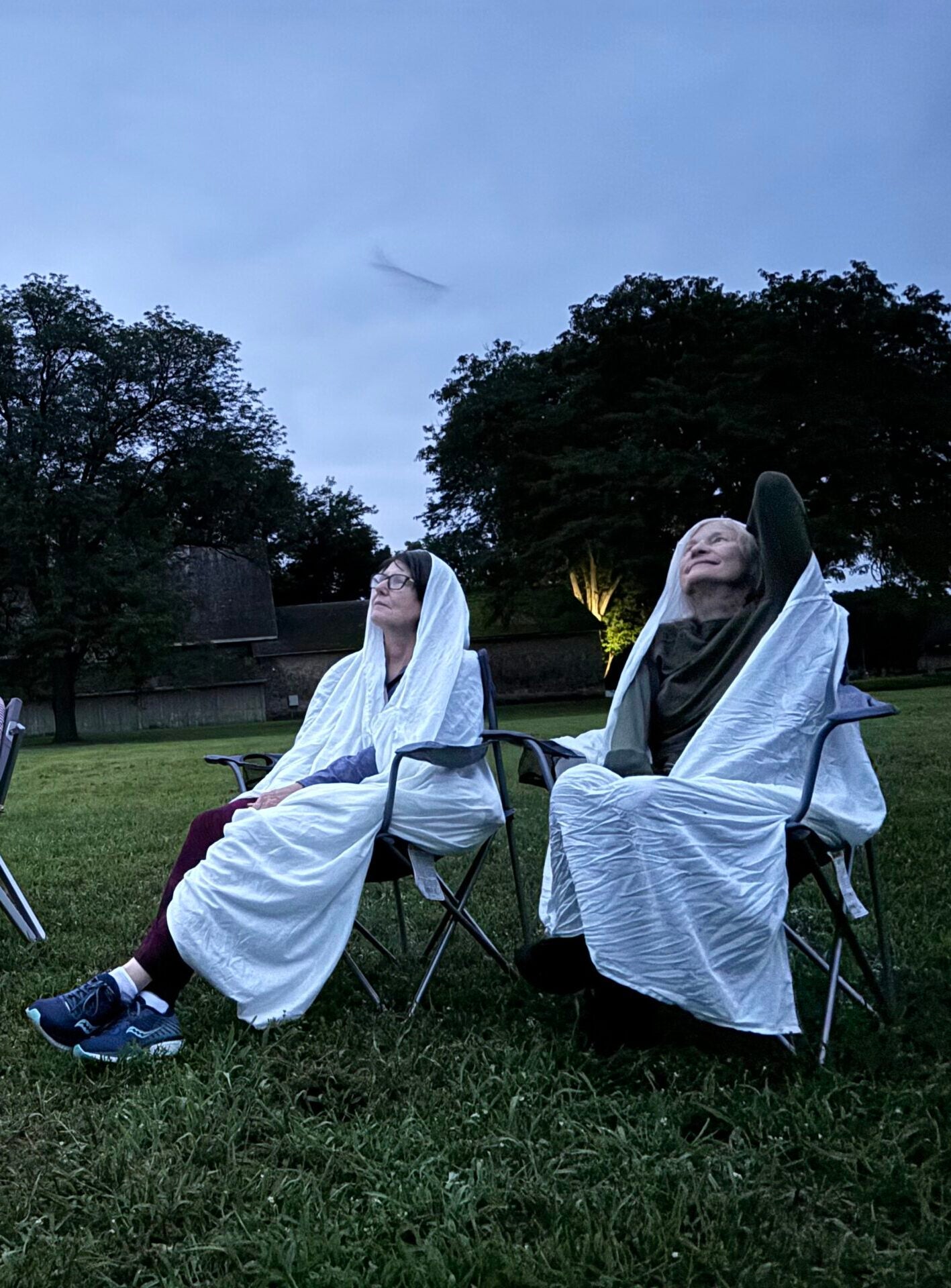
The bats were finally settled in for the morning. And the humans — we had the whole day ahead of us.
“I bet you’re wondering where the nearest coffee shop is,” White joked after the event wrapped up for the morning.
Coffee did help with the fatigue. But seeing the bats’ morning swarm — no amount of caffeine can energize you like that.
Now, with the weather getting cooler and the year coming to a close, there are just a few NRF field trips left in the 2025 season, which runs through early November. NRF fans are eagerly waiting for the spring, when the 2026 trips will be announced.
“We look forward to signing up every year, and it’s just hard to choose which ones we’re going to go to, because they’re all so fabulous,” said Martha Kronholm of Wisconsin Rapids.
But for the winter, they’ll have to sit and wait in hibernation — not unlike their new bat friends.

“Wisconsin Life” is a co-production of Wisconsin Public Radio and PBS Wisconsin. The project celebrates what makes the state unique through the diverse stories of its people, places, history and culture.